Photos by Any Space Media
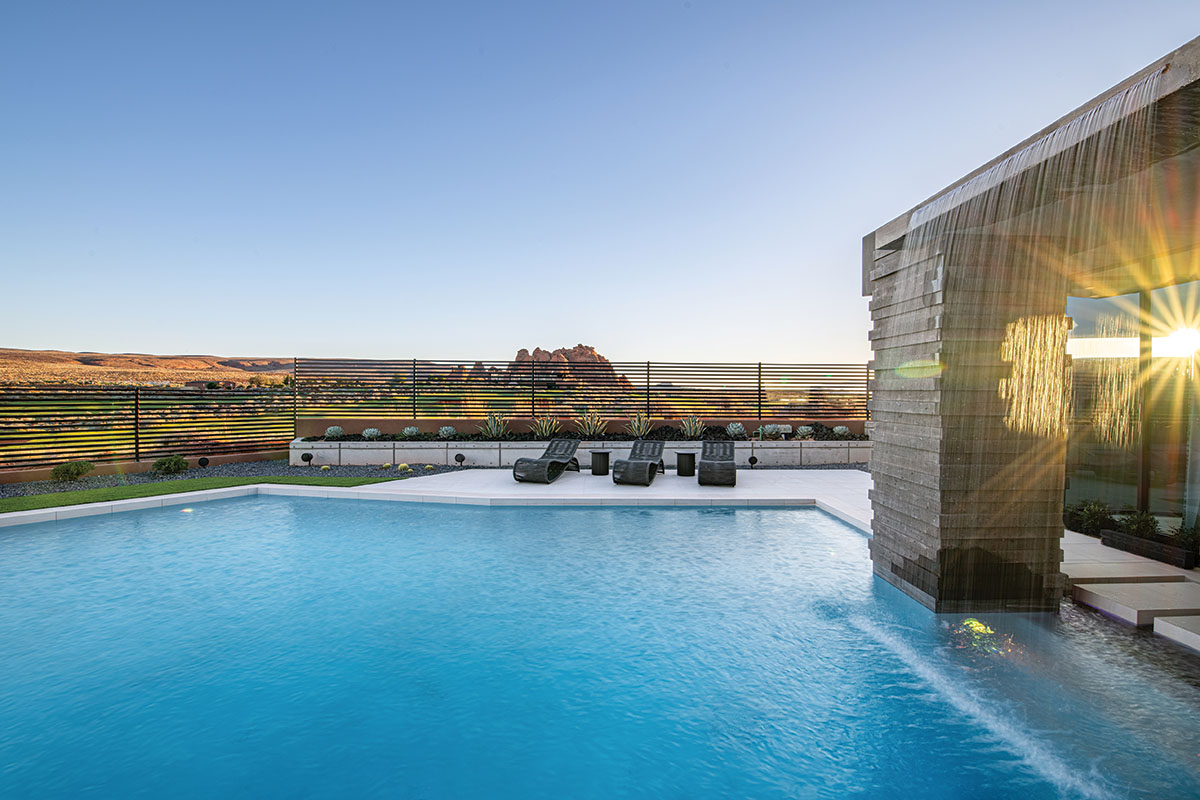
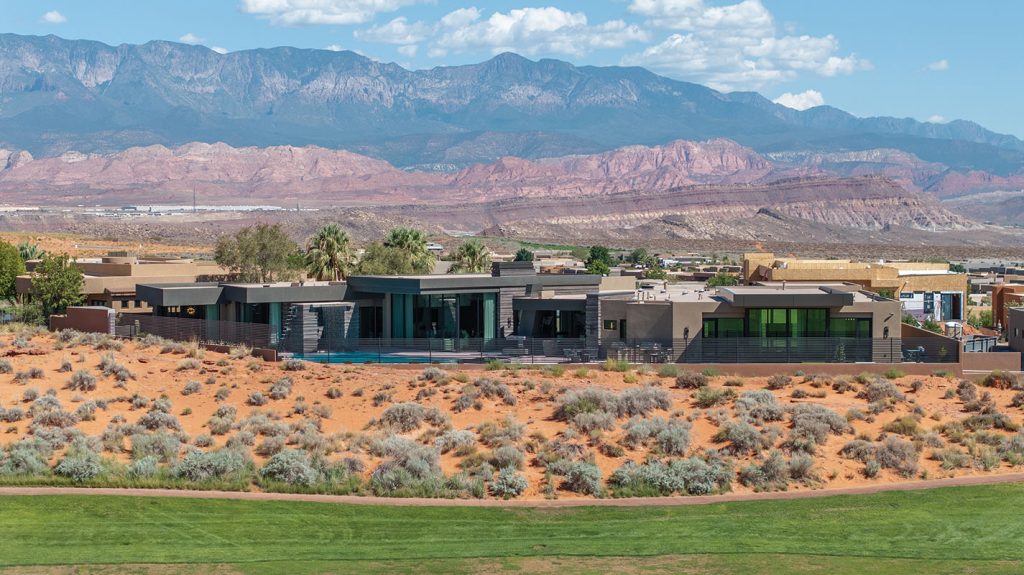
Set against a backdrop of red rock and open sky, this Sand Hollow Resort home captures the spirit of the desert in bold, contemporary form.
When a client starts with, “I want the best house in Sand Hollow,” you know the bar is set high. Luckily, this Hurricane-area property—perfectly tucked between two golf course fairways with the clubhouse perched on a gentle rise—was already making a strong case for greatness. Architect Rob McQuay saw it too: a rare opportunity to shape views so precisely that no neighboring home would interrupt the sightlines. “I saw great potential with the location and was eager to be part of the project,” he recalls.
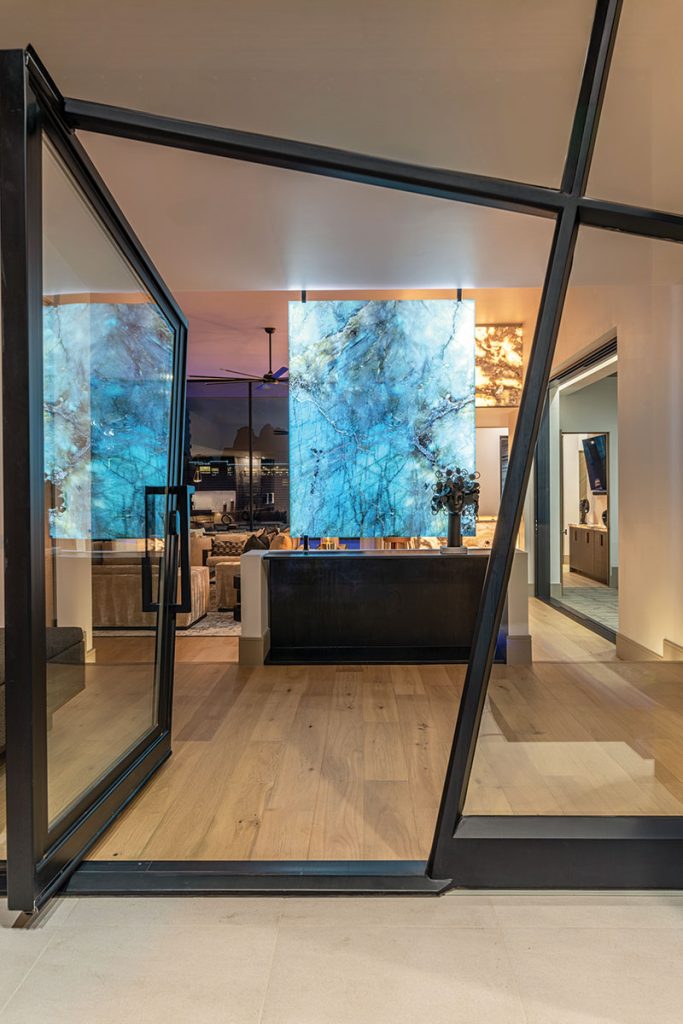
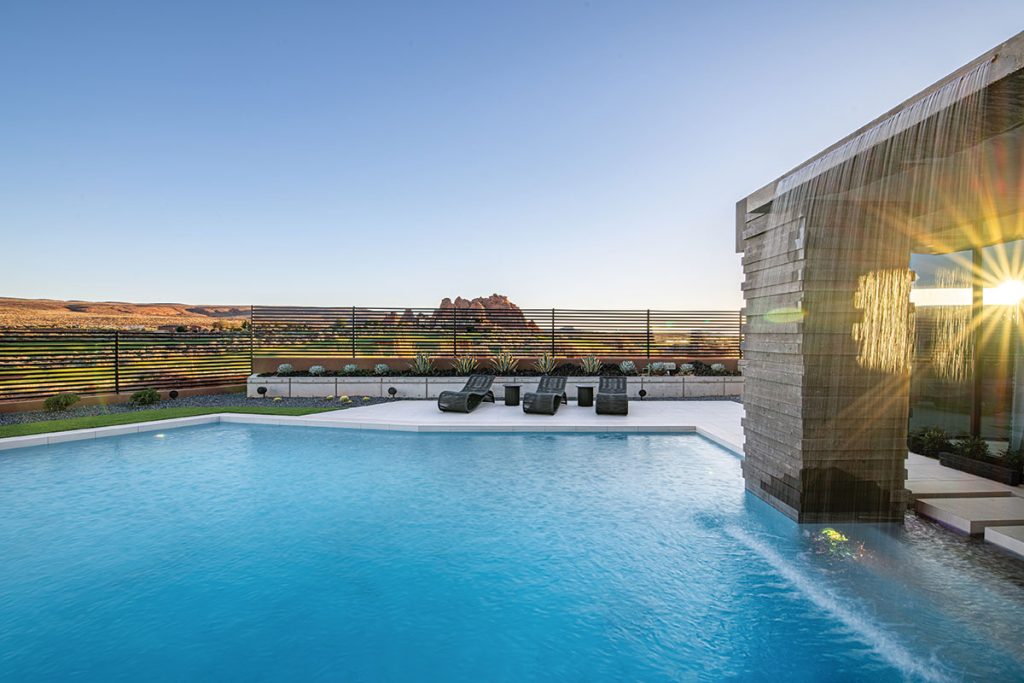
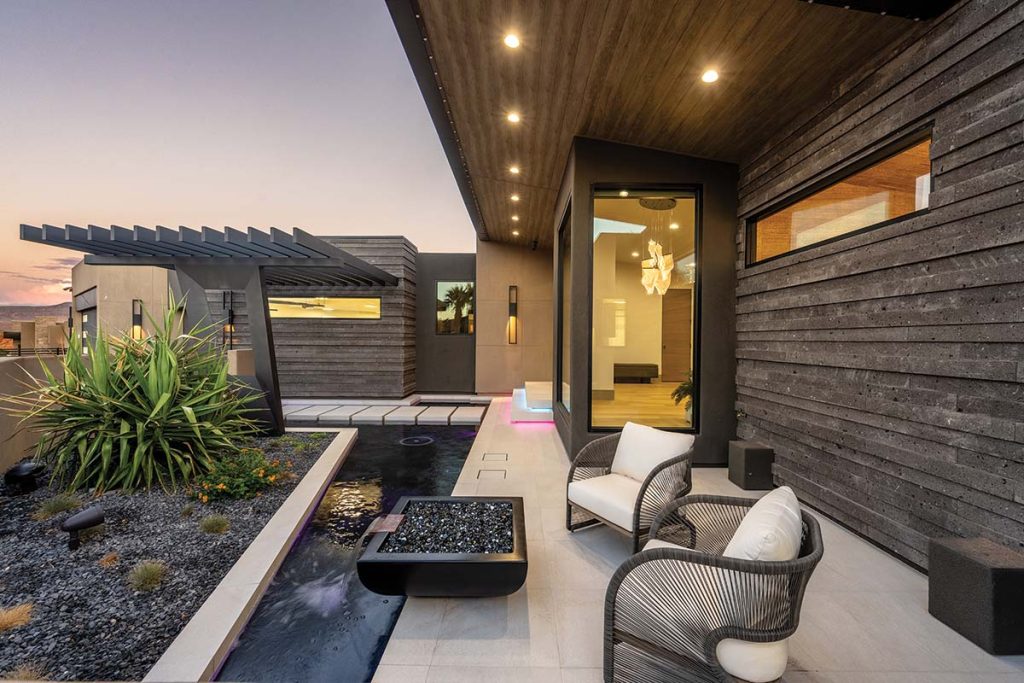
But the lot came with quirks: a narrow street frontage, a pie-shaped footprint and a request for two double garages. From the curb, that much garage could have overwhelmed the elevation, but instead, a bold front entry steals the show. Set between flanking double garages, a striking corridor draws the eye inward, where custom gates, a metal pergola, an iron-and-glass pivot door and a tranquil reflection pool welcome guests into the sanctuary.
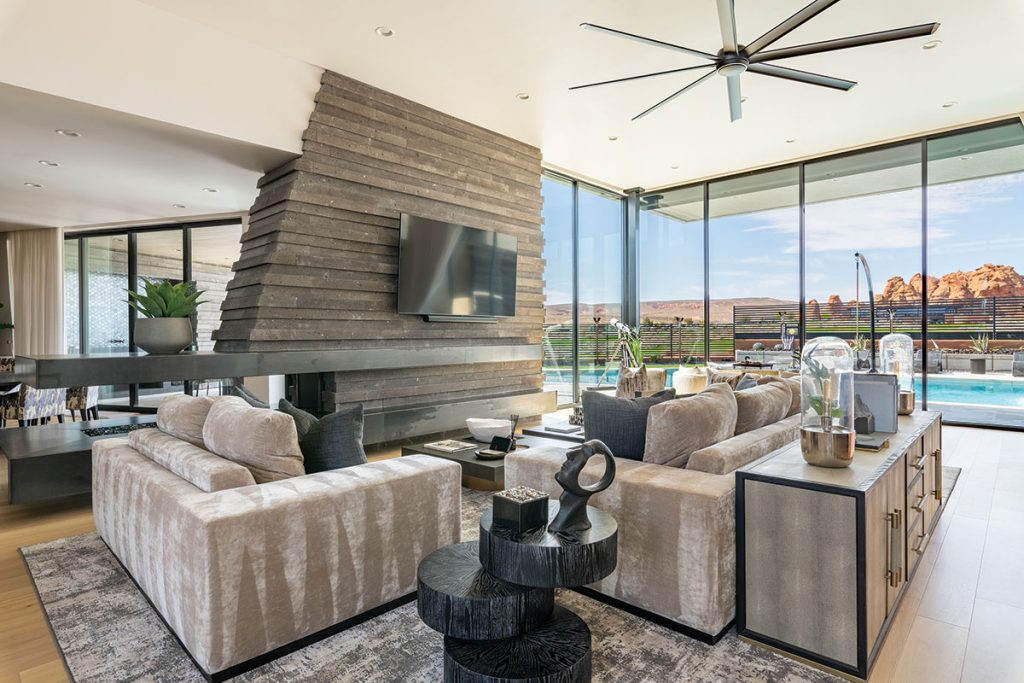
Inside, the wedge-shaped lot proved to be an asset, allowing for a client-driven layout that places the guest quarters and the primary suite at opposite ends of the home for privacy. At the center, the kitchen, dining area and great room flow together in an open, airy plan. Nearby, a theater and golf simulator room can be tucked away behind 28 feet of interior glass doors. All of it connects seamlessly to the resort-style pool and surrounding landscape, reinforcing the home’s strong sense of indoor-outdoor living.
“Our clients wanted a unique home that’s contemporary and connected to its site, and you feel that the moment you arrive,” says interior designer Julia Roberts, principal of HüGA Home. She and her team worked closely with architect Rob McQuay of McQuay Architects and builder Wayne Anderson of Anderson Custom Homes to not only check every box on the owners’ wishlist, but to also elevate it in unexpected ways.
Step inside the front pivot door and the design language immediately becomes clear: contemporary, refined and deeply rooted to the land. A two-sided resin panel—resembling backlit Blue Labradorite granite—separates the entry from the great room, creating a striking focal point. “It fosters a fluid feeling by connecting with the entry’s water feature and the pool out back,” Roberts explains.
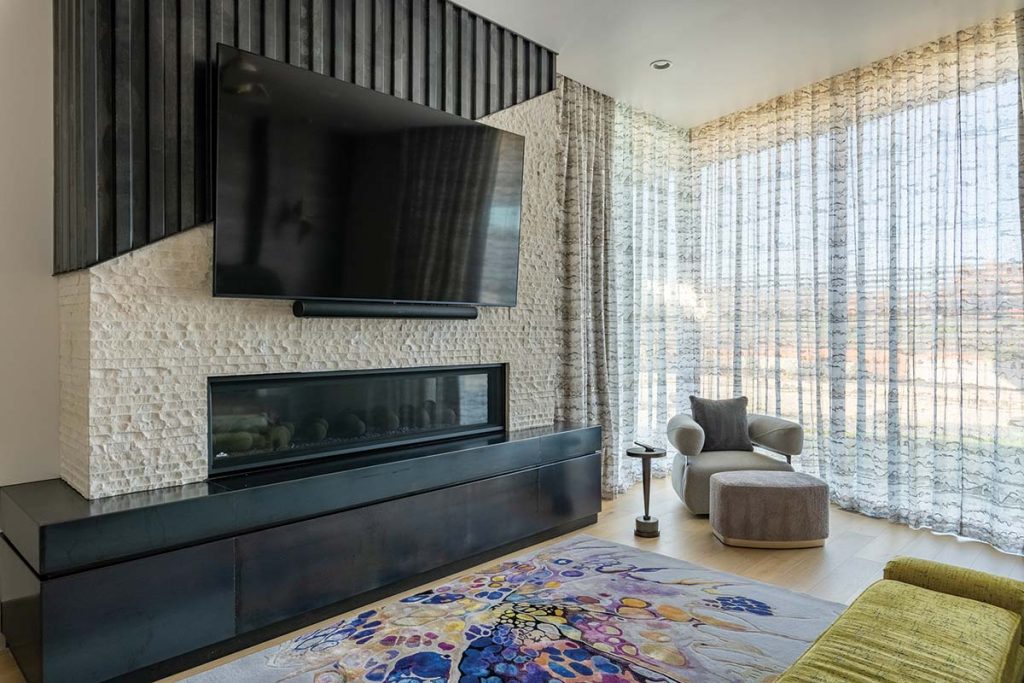
Stone plays a starring role in the home, grounding its modern architecture with permanence and drama. In the great room, a three-sided fireplace commands attention.

Sculpted from Negro Cantera, a dark volcanic stone, it features a cantilevered metal hearth and mantle that emphasize its asymmetry. “The fireplace is a strong, unifying element,” says McQuay. “It anchors all the common areas and extends outdoors to an exterior fireplace near the pool.”
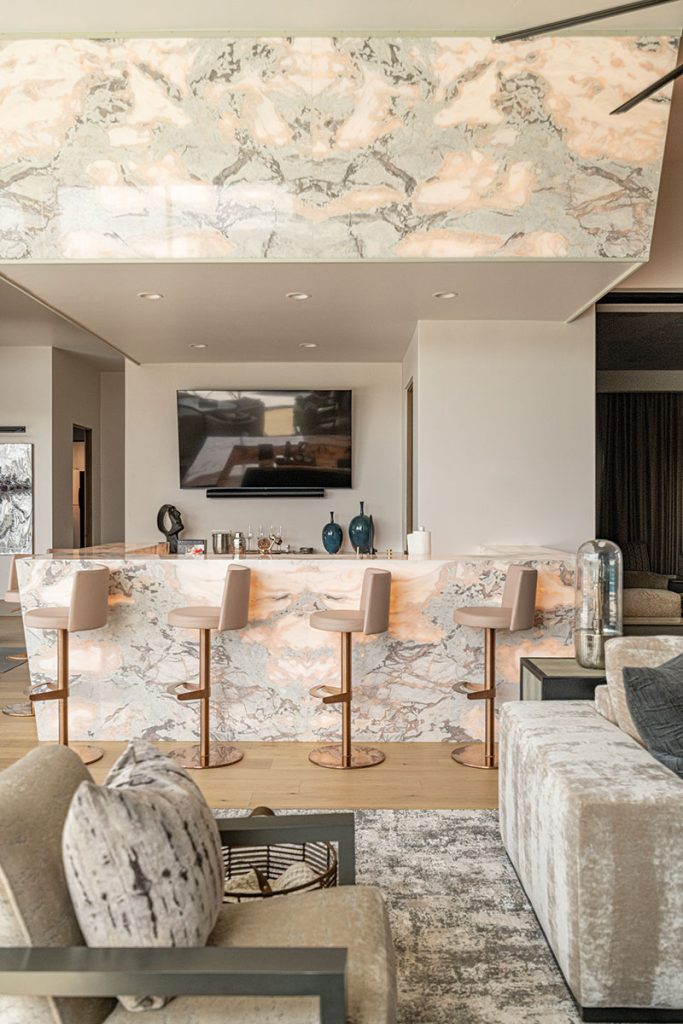
Across the room, a custom bar adds another bold gesture. Its backlit marble slabs echo the fireplace geometry, reinforcing the home’s sculptural language. “The inverse angle of the bar mirrors the fireplace wall,” Roberts explains. Like the backlit quartzite vanity in the powder room and the book-matched lilac marble shower in the primary bath, the bar’s stone was chosen to elevate the experience. “I love mixing the primitive essence of stone with the clean lines of contemporary design,” she adds.
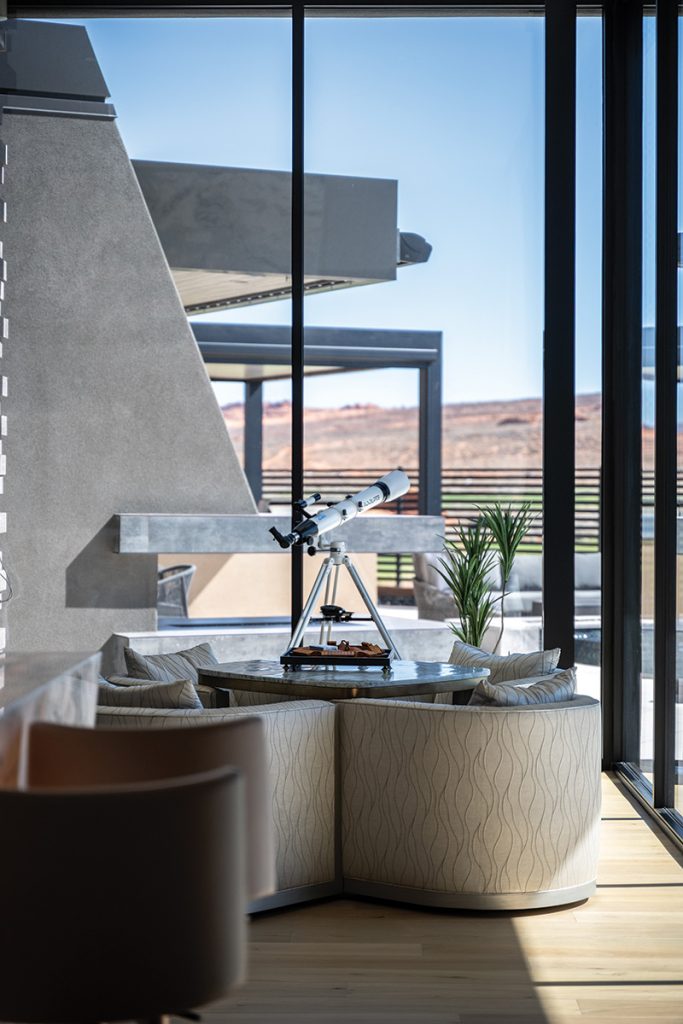
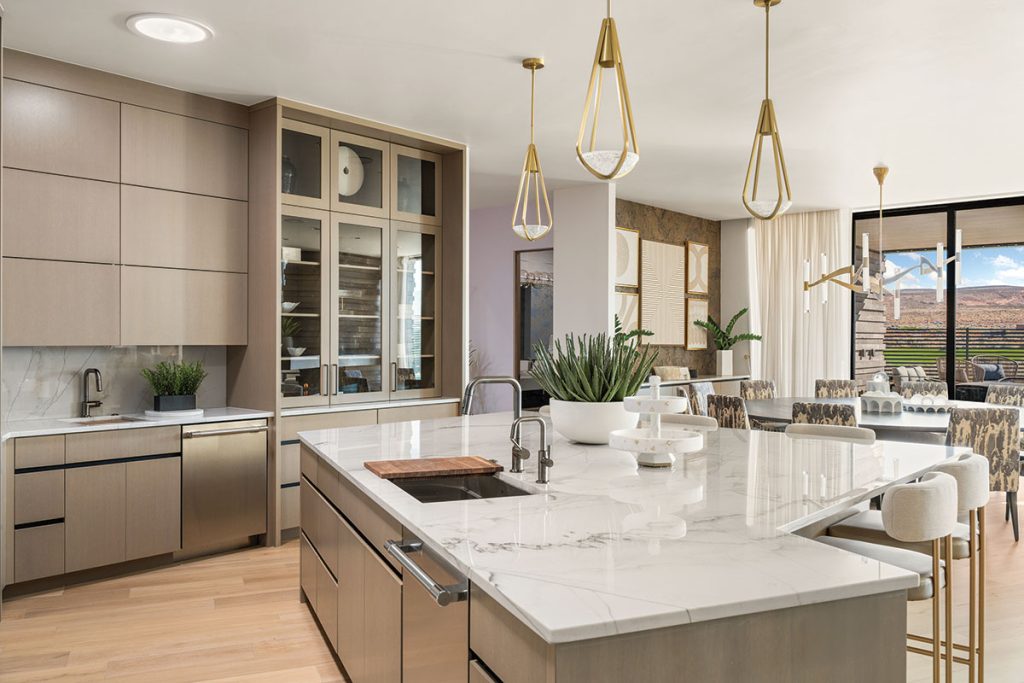
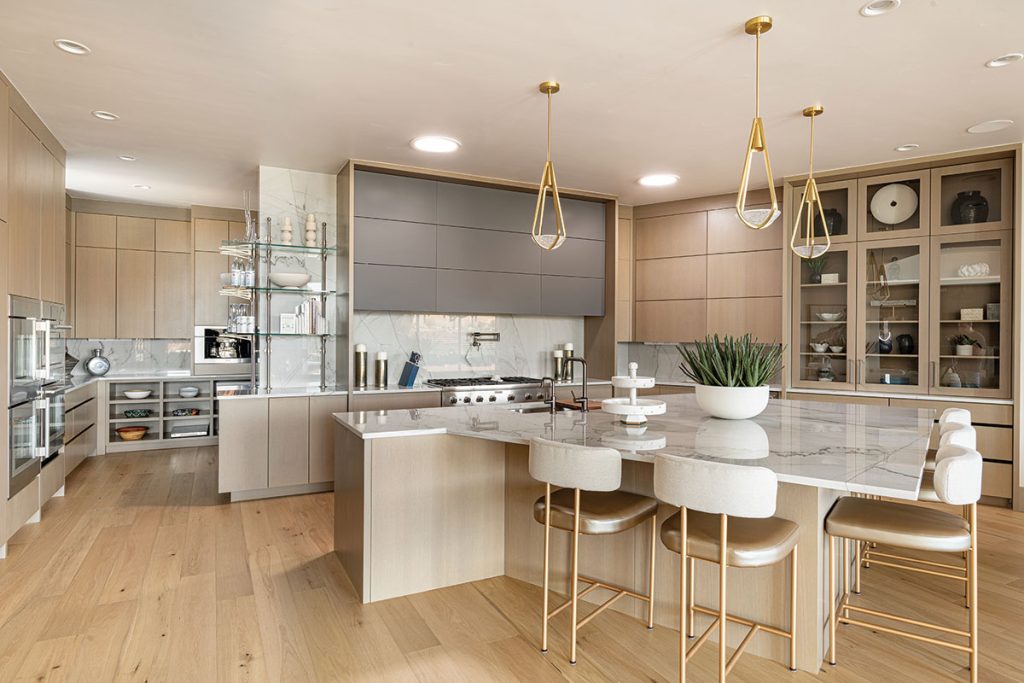
That tension—earthy yet refined—guides the home’s color palette and materials. The homeowners weren’t drawn to neutrals, so Roberts looked to the surrounding desert for inspiration. “We used rift-sawn white oak cabinetry with a custom taupe-coppertone finish that evokes the color shift at dusk,” she says. Throughout, moody tones are layered with smoky glass, steel accents and wallcoverings that reflect light with a soft glow. Darker elements are balanced by metallics and grounding finishes like Brizo’s Black Onyx and Emtek’s slate ash gray plumbing. “That contrast brings a modern edge without feeling cold,” Roberts notes.
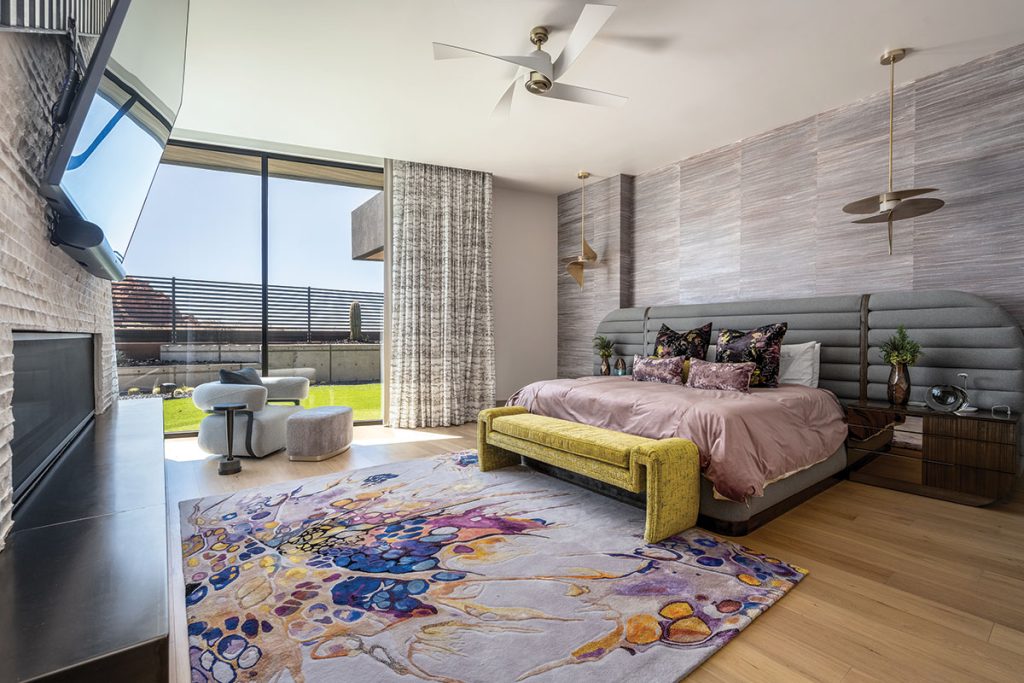
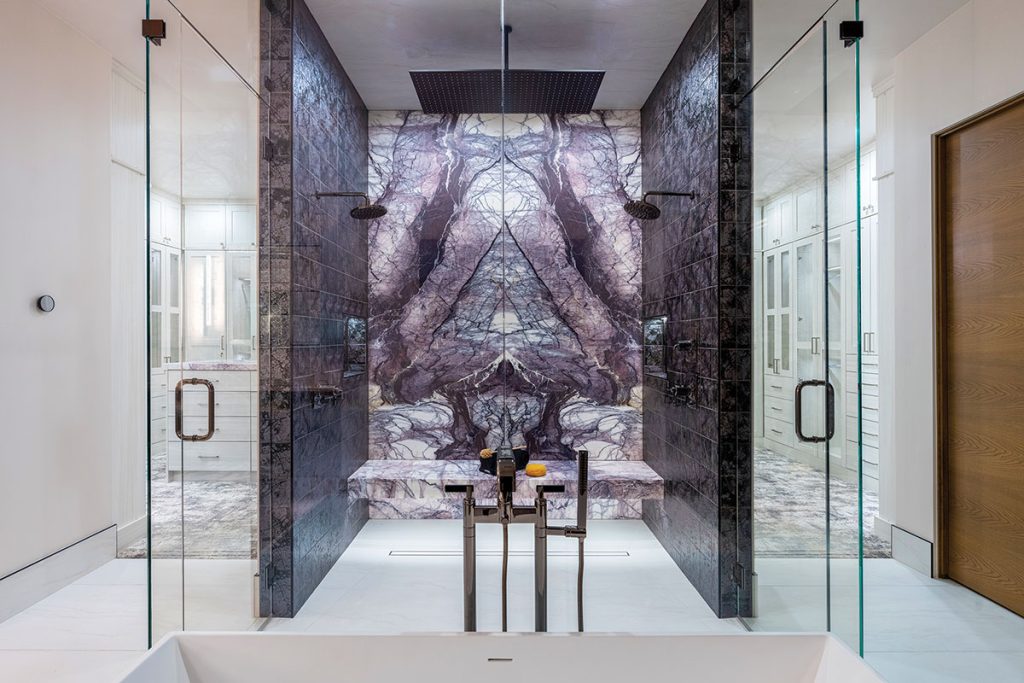
Texture adds another layer, creating depth and dimension. “Texture casts shadows and builds patterns without needing literal patterns,” she explains. Fluted surfaces and geometric lines reference nearby rock formations. Wire-brushed cabinetry mimics the softness of cactus bark, while steel details bring shimmer and movement. Pops of color in accessories nod to blooming desert plants, and tactile wallcoverings—like the angular 3D tile in the powder room—add a primitive, sculptural quality. “It’s those layers that make a space feel lived-in but elevated,” says Roberts. “Texture helps tell the story of the landscape—its softness and its strength.”
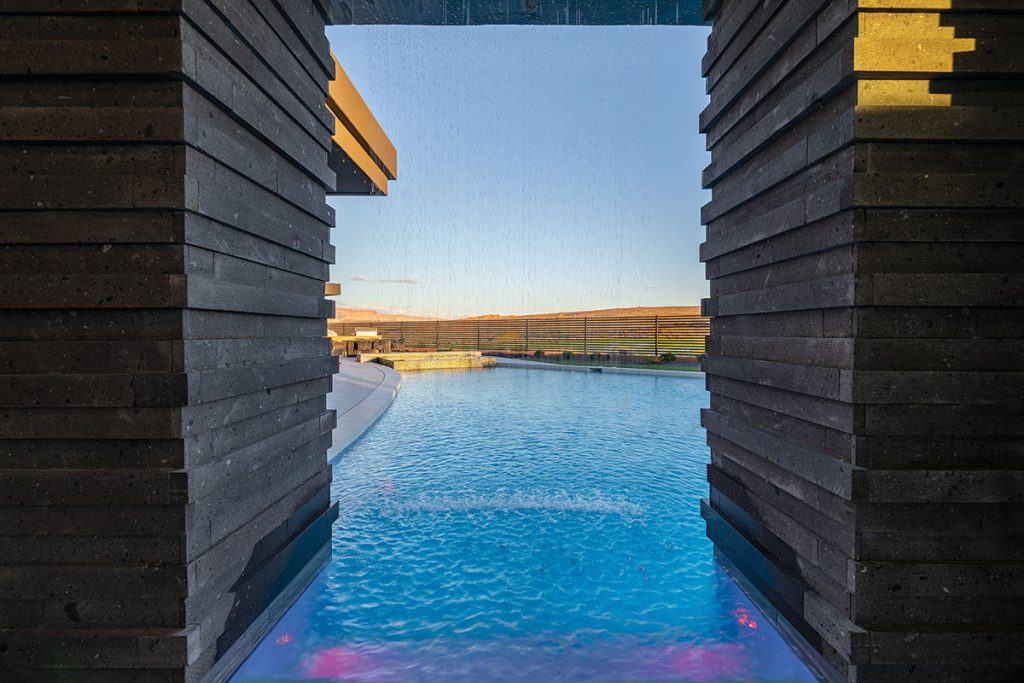
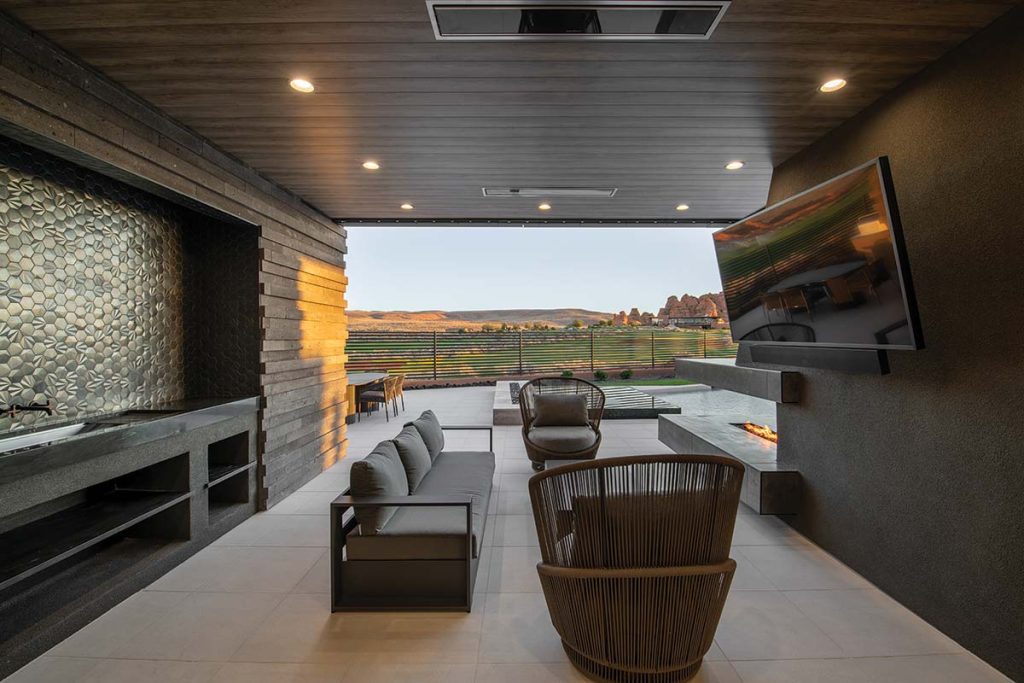
While the home makes a striking visual statement, much of its brilliance lies in what you don’t see. Beneath the surface, it’s a masterclass in precision and engineering. Builder Wayne Anderson highlights the structural sleight of hand: the concealed support above the suspended-stone bar, the complex framing required for the cantilevered fireplace and the seamless corner in the primary bedroom where floor-to-ceiling glass doors meet at an unconventional angle. “There’s a lot of hidden complexity,” he says. “Even the disappearing glass walls along the back of the house took incredible precision to frame cleanly and function effortlessly.”
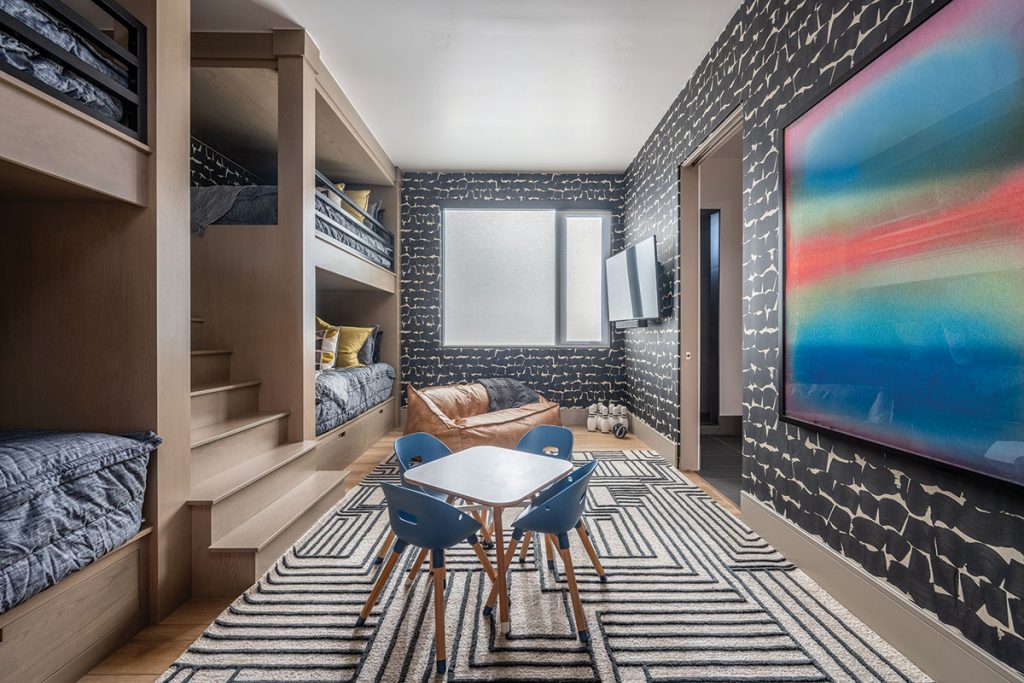
In the end, what sets this home apart isn’t just the materials, views or detailed construction—it’s how every element was designed to shape the experience. From the last light framed through an expansive window to the soft sheen of brushed wood or tile, the result is a desert retreat that honors its setting while feeling entirely original.