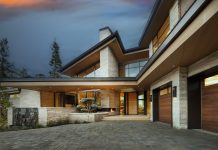










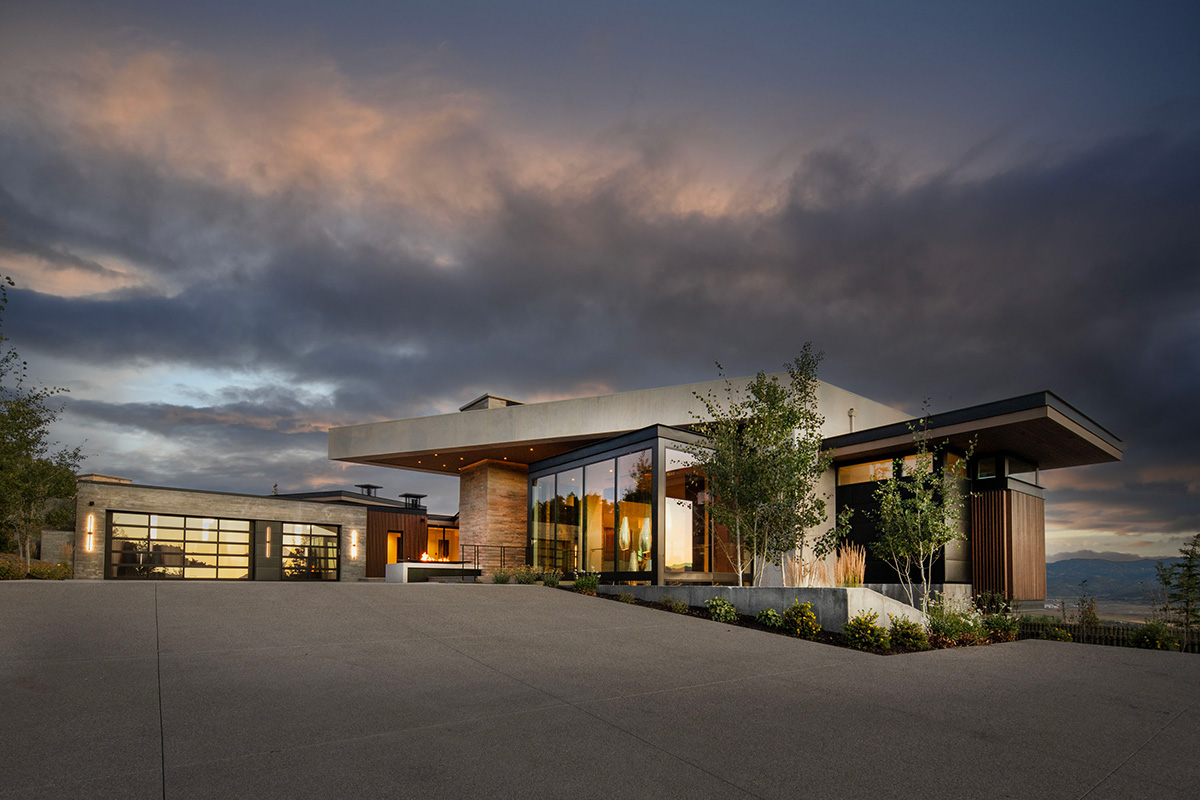
This new home in Promontory stacks rectangular forms at skewed angles to create surprising views to the landscape and into the home itself, testing the camera’s ability to balance light
Photos by Scot Zimmerman
Playing the Angles
This week marks the twenty-year anniversary of devastating Hurricane Katrina. I remember watching as televised events unfolded in New Orleans while I studied and played with my first digital camera. For me, this is also the twentieth anniversary of shifting from film cameras to digital. With the resurgence of interest in film photography, I am occasionally asked which I prefer and why. I prefer digital, and the primary reason is how I can manage and balance different light sources: brightness, intensity, and color. With today’s architecture and especially mountain resort homes, the views are the primary driver to the home’s design, and advances in glass and window technology makes it possible to have a significant amount of glass without sacrificing comfort or overtaxing the energy demands of the home.
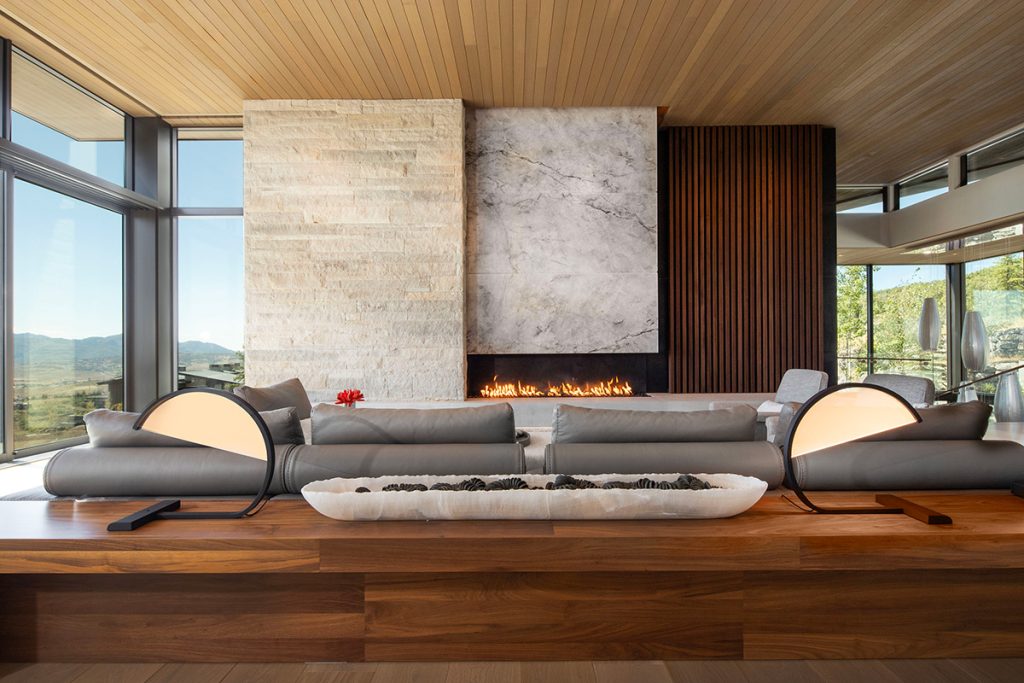
A recent home with architecture by Michael Upwall of Upwall Design, built by Midway Construction, and interior design by Marion Rockwood juts out on a ridge in the Promontory development. It offers vistas in all directions and views to other spaces within the home. Photographing presented some technical challenges. An example of the assistance digital technology offers an architectural photographer is the living area above. There is a glass wall to the bright light of the southwest, windows to the northwest, and windows to the north and varying light exposure within the open plan. The photograph needs enough detail to show the textural and other differences in the three materials of the fireplace wall. With a little flash, multiple exposures, and a lot of help from Photoshop, I could make the space look like the eye sees it with the light and color balanced. (A photographer can’t help but marvel at how efficiently our eyes and brains work together.) Without the technology, the windows would be light and burned out so you couldn’t see any forms, and if the exposure compensated, the room would be dark with no detail.
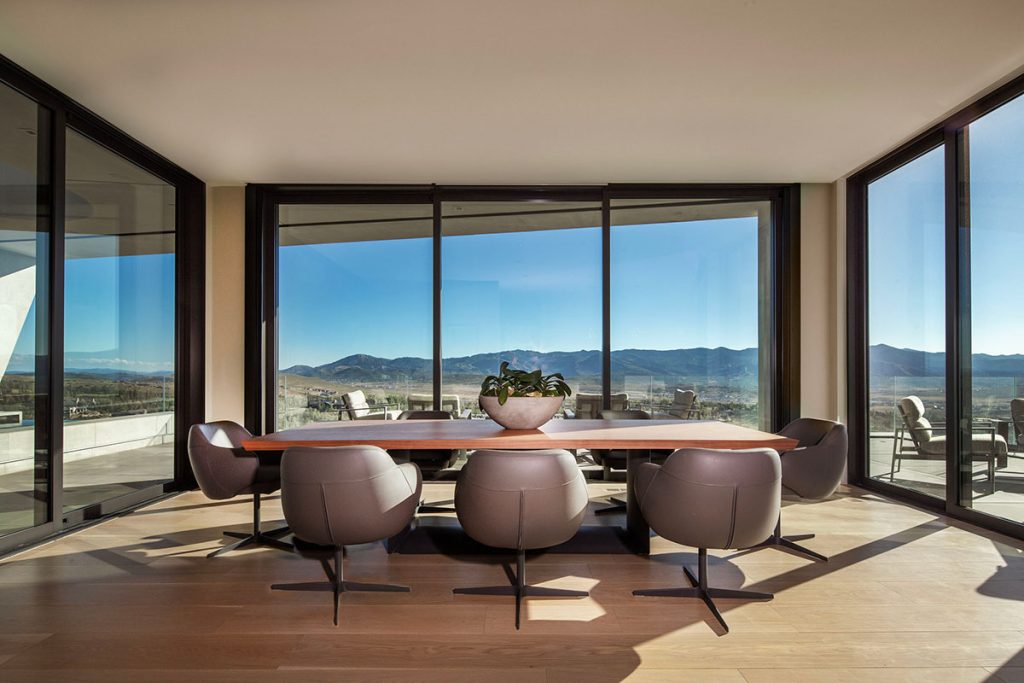
The dining room has glass doors that open to outdoor living on three sides. An angled overhang frames the view to the hills, and to the left is a covered courtyard. With modern architecture, light and shadow are important elements that give life to the design, so I wanted to capture this space in the daylight.
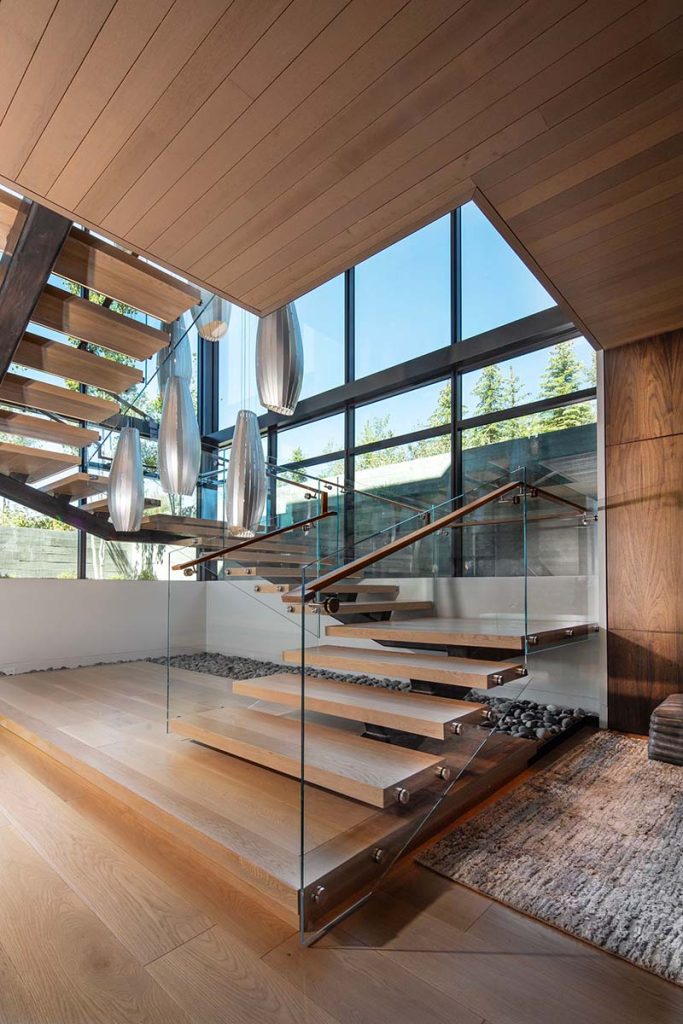
The dramatic stairway with floating stair treads and hanging glass pendants fits in a glass, steel, and concrete prow. I am on the lower level in the family room. I softly flashed the wood so the detailing could be appreciated.
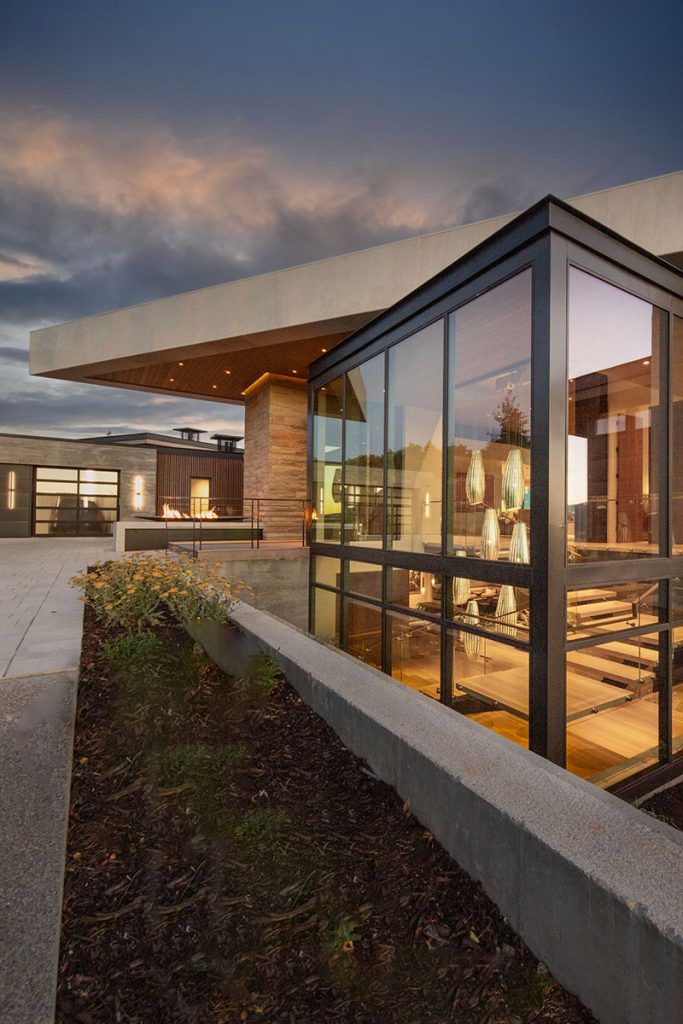
Here is the prow from an exterior view with its play of angles and forms.

I mentioned the covered courtyard. It has a glass wall and doors to the right opening to a galley bar. Behind the camera is a glass corridor leading to the master suite. The daytime photo, made possible by multiple digital exposures, shows the detailing and furnishings well.
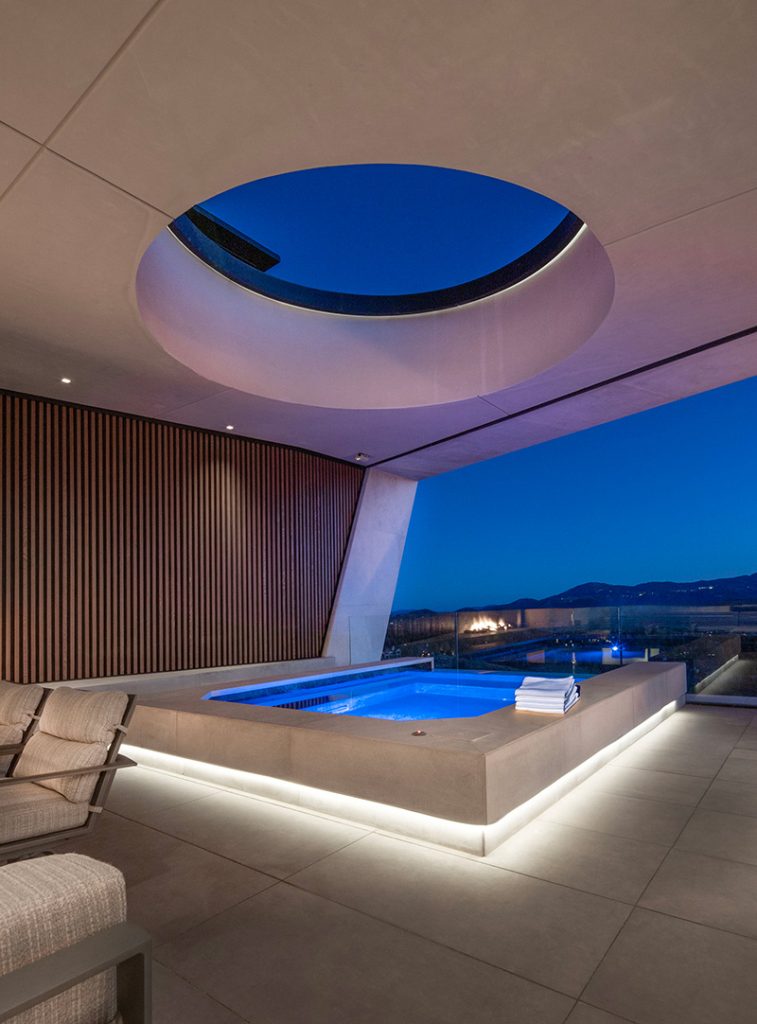
The evening shot of the courtyard where I moved in closer to the pool is much more dramatic. Taken during the blue hour, the sky is cobalt. This shot relies on techniques from film photography that recognizes that at twilight in the magic hour nature balances the light. Without digital intervention, the camera can capture a setting just as the eye sees it.
After saying that I prefer digital photography, truthfully, I haven’t abandoned the techniques of film photography. Film photography relies on light’s natural balance when the sun goes down, and there is less than an hour to get the shots. I like the ambiance, the drama, and showing how the home looks in the evening, the time most of us are at home enjoying our houses. That means preparing and styling all the spaces in advance and picking the best angles and the right lens. When the sun goes down, I run from shot to shot. I will show you the progression of “magic hour” shots.
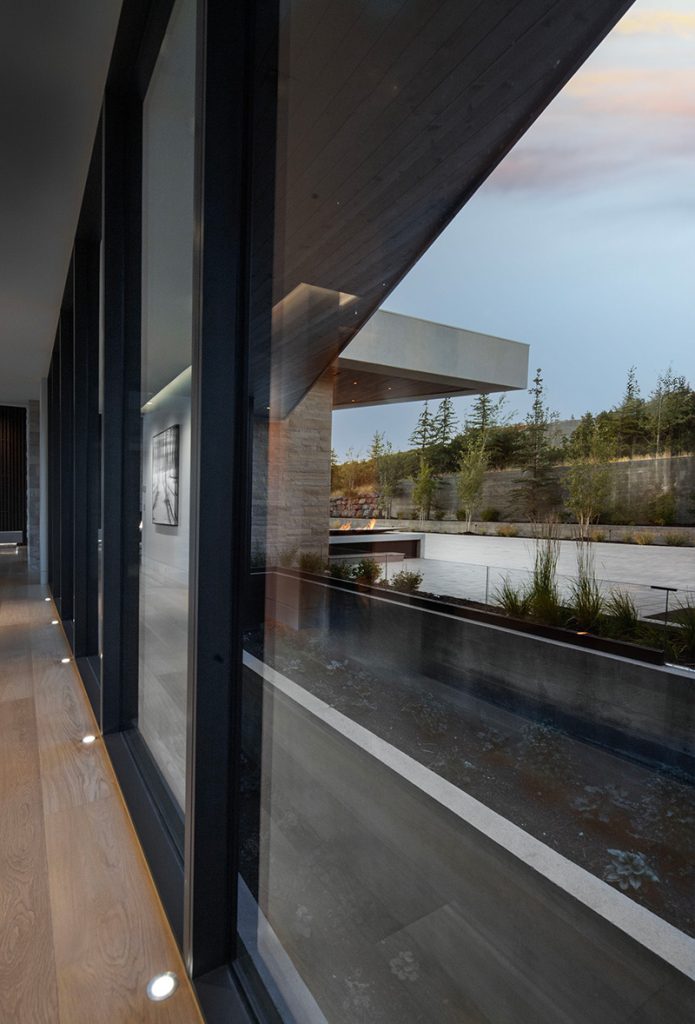
This is the exterior view from the double glass-sided corridor leading past the courtyard. The view offers an interesting perspective on the angled architecture that couldn’t have been appreciated without the glass.
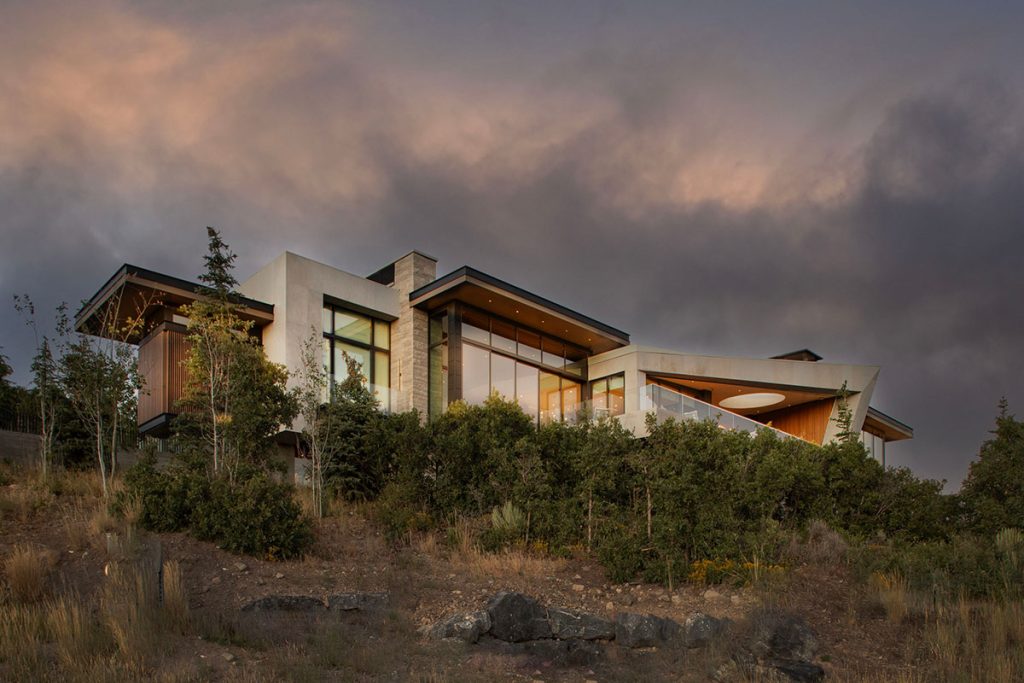
The hilltop view catches the golden light of the setting sun.
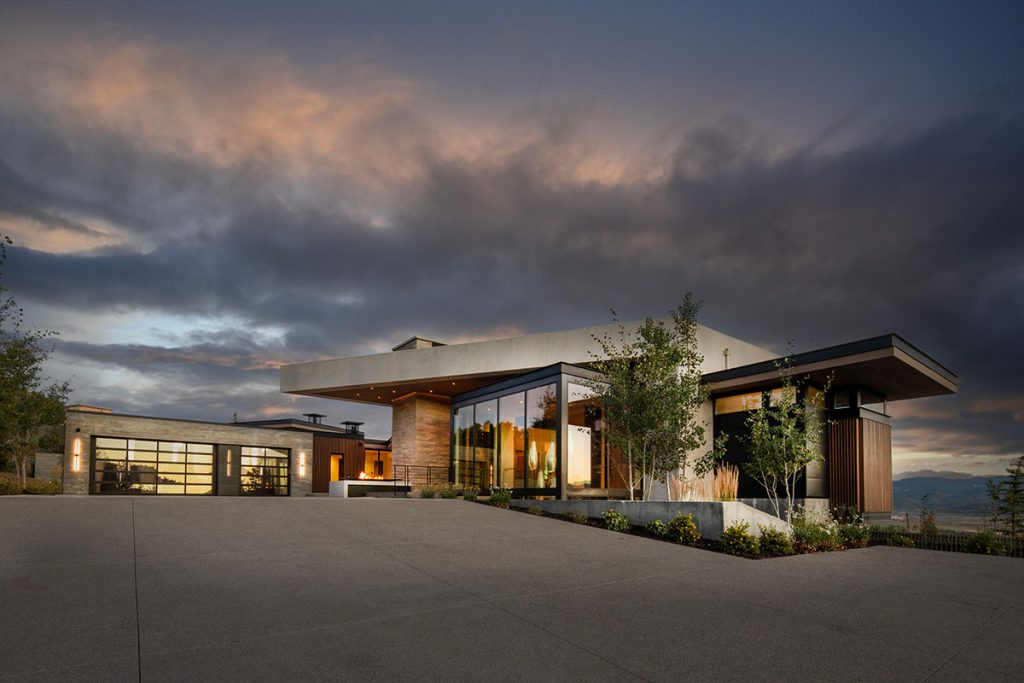
On the opposite side, a drive leads to the auto court and entry.
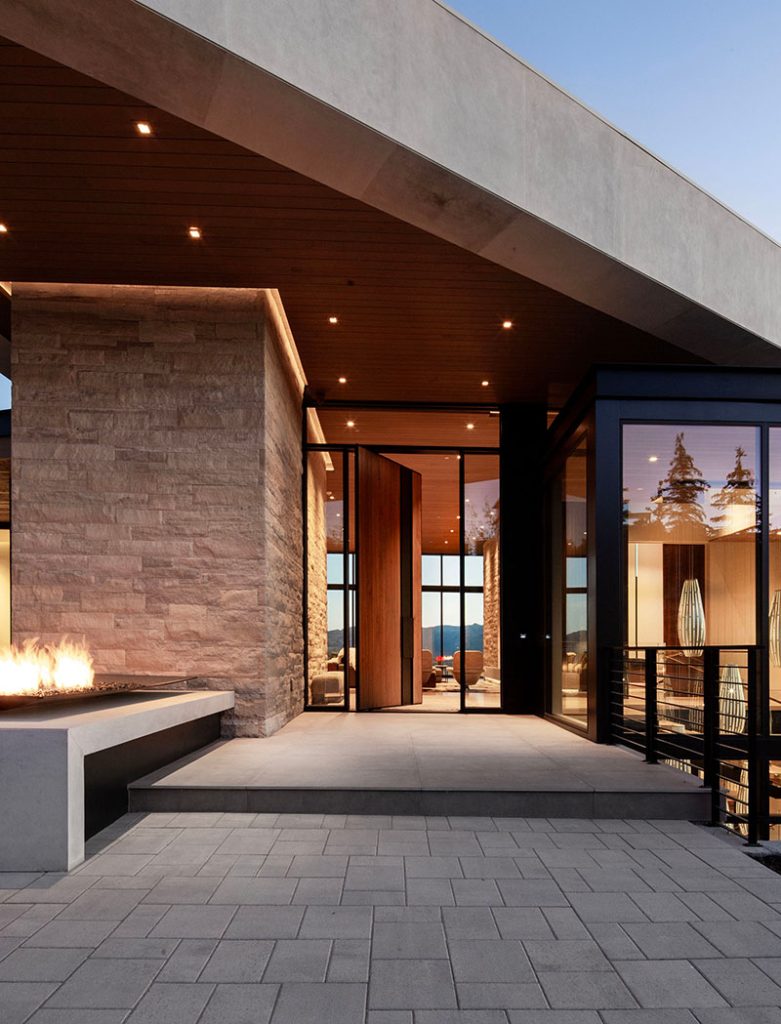
A firepit greets visitors approaching the sheltered entry. When the giant pivot door swings open (and helped by the windows on each side), guests are dazzled by the views to the mountains, immediately establishing a sense of place.
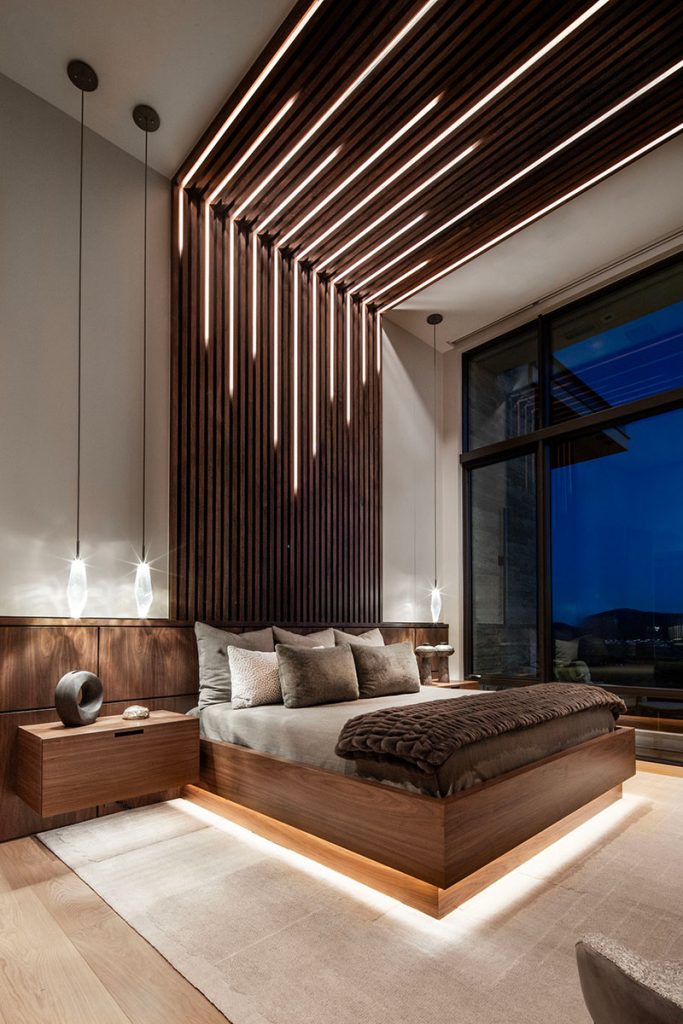
To showcase its dramatic lighting, I waited until late twilight for this shot of the secondary suite.
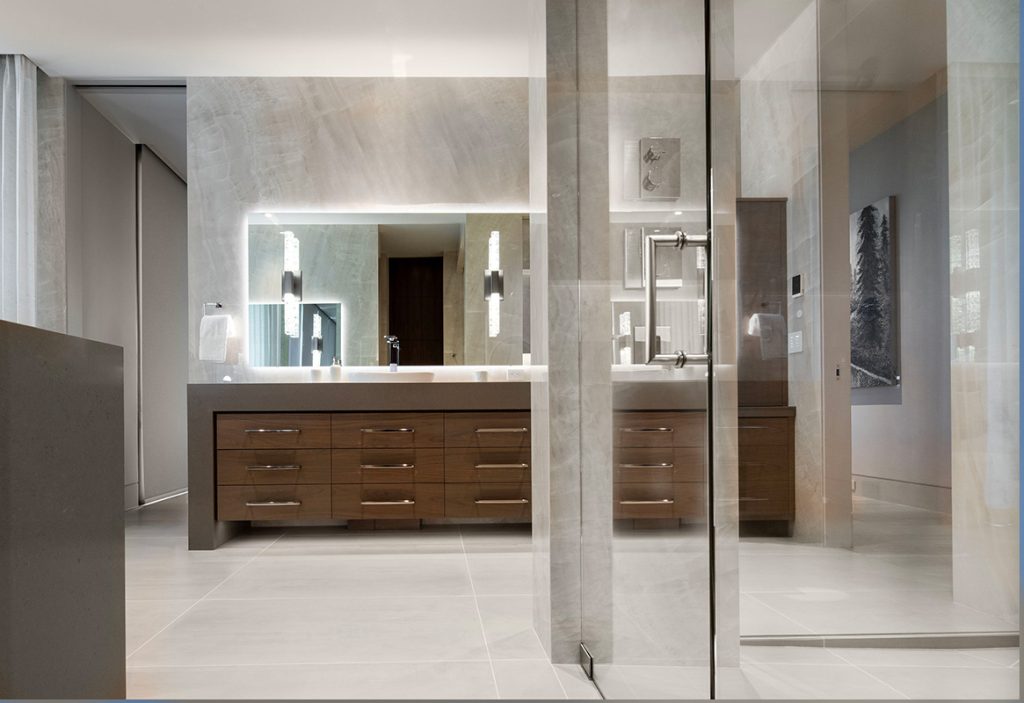
If natural light and views aren’t a design feature, bathrooms can be photographed at any time. The challenge of bathrooms is reflections. It’s easy to have reflections from lights and flash on the glass, and very easy to have a photographer and equipment in the mirror.
I photographed so much more of this beautiful home that I’m not showing you, but this week I wanted an opportunity to emphasize how balancing light comes into play with architectural photography, especially with modern and contemporary homes built with considerable glass. This is the most challenging aspect of architectural photography for me. After 45 years, I keep learning new techniques for managing it, and I hope that technology continues to offer new and better solutions.