













Framed by red rock towers and open skies, this Moab home invites the outside in with expansive glass, layered forms and a design that turns topographic challenges into architectural poetry
Photos by Emily Minton Redfield
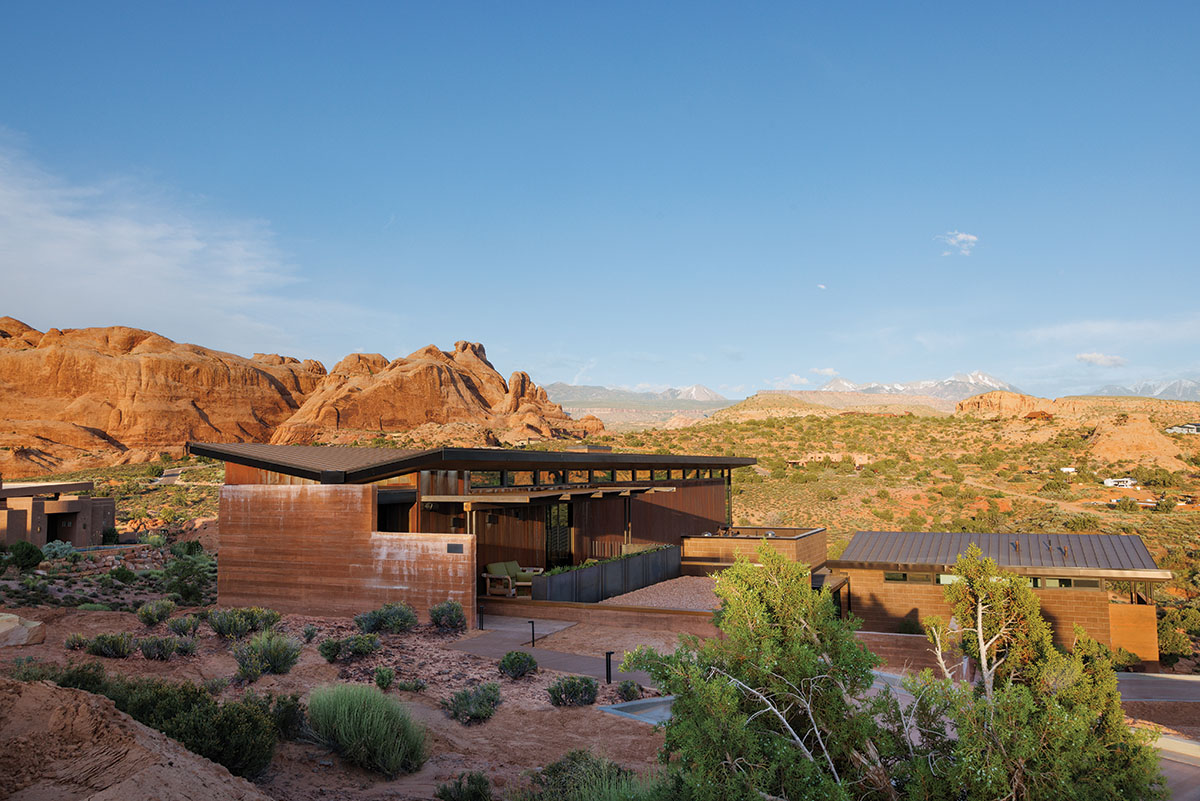
In the heart of Utah’s red rock country, this modern Moab dwelling rises from the desert floor—not in defiance of the rugged landscape, but in concert with it. Designed by architects Jamie Ali and Richard Mullen, principals of the architecture and design firm Demesne, the home is more than a contemporary residence. It’s a thoughtful dialogue between architecture and environment, where form meets function and restraint gives way to resonance.
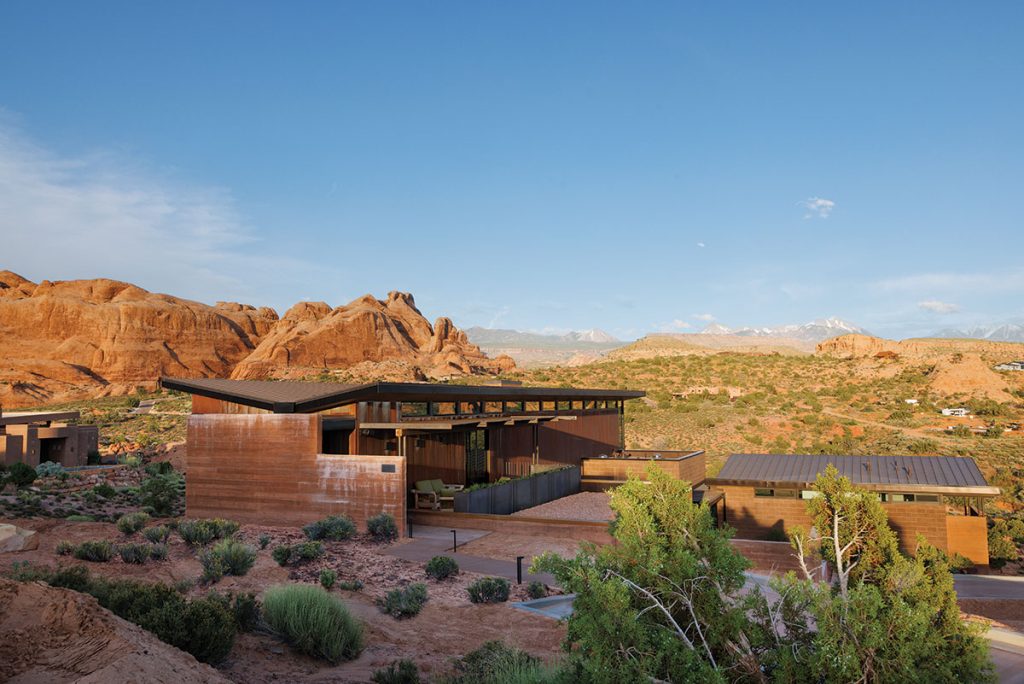
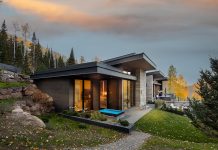
“It’s a magnificent setting of towering red rock canyon walls and the La Sal Mountains—all in view from our house,” the homeowner explains. Capturing these vistas, the dwelling makes an impressive statement. Its masses travel the property’s steep slope, and its low-sitting silhouette—along with a material palette of dyed board-formed concrete, naturally patinaed Corten steel panels, masonry blocks and wood siding—echoes the tones and textures of the surrounding terrain and distant cliffs. Rather than dominating the landscape, the structure feels grounded within it, its weathered finishes evolving gently with sun, wind and time.
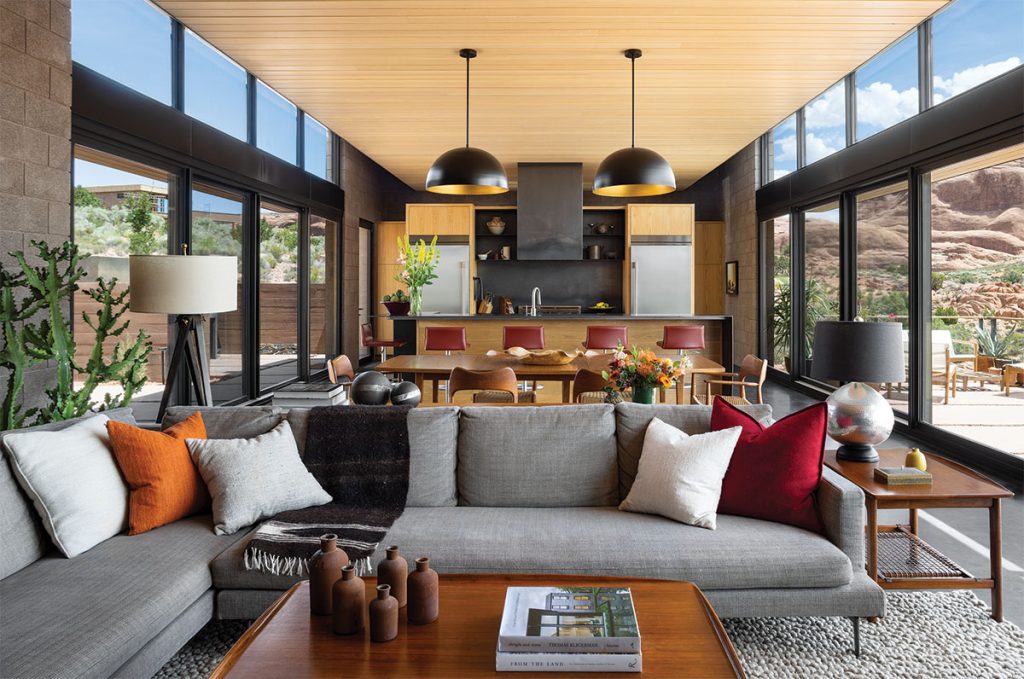
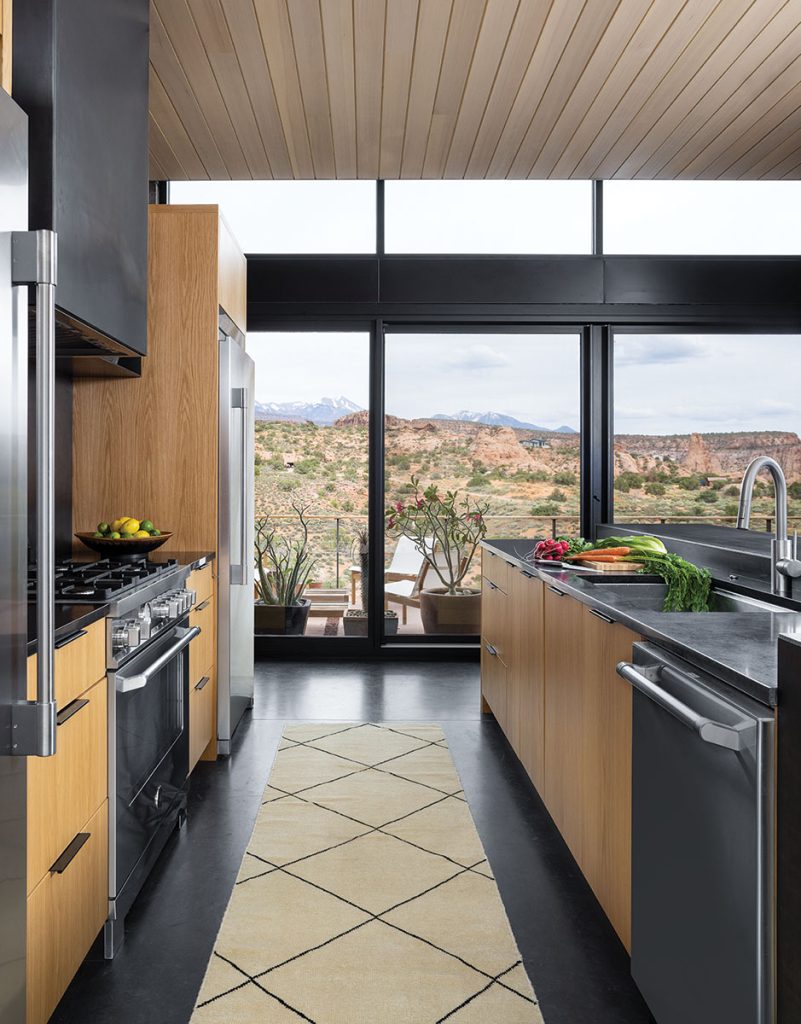
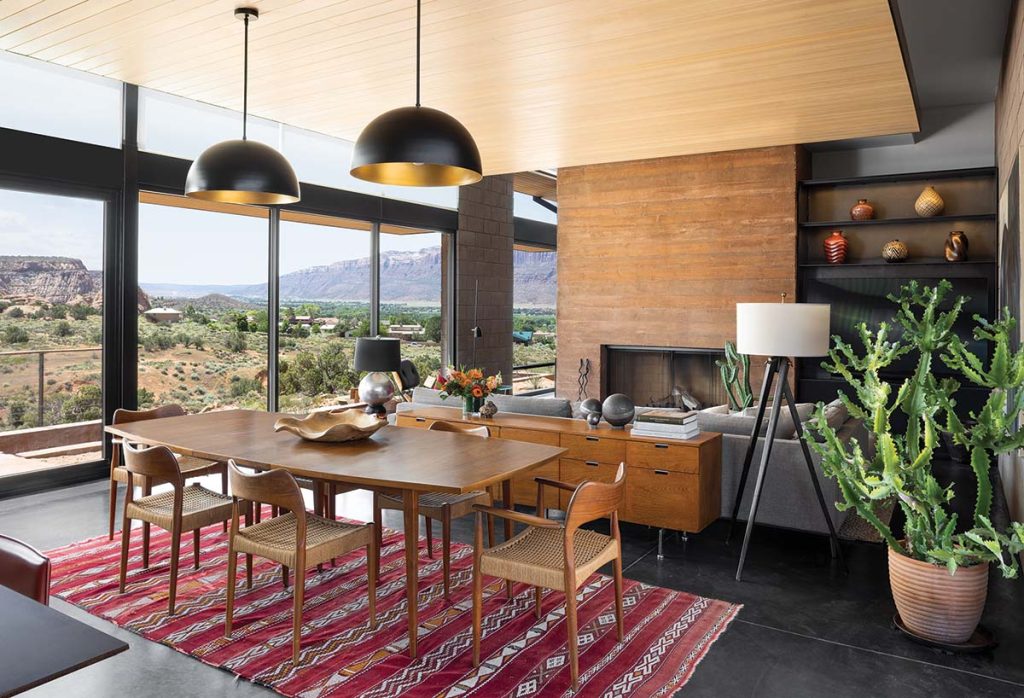
open-plane living, dining and kitchen area.
“Nature is the star of the show here,” the owner reflects. “We wanted a home that blends in—clean lines inside and out, nothing that distracts from the beauty of the landscape.” Simply stated, Mullen emphasizes, “Our goal wasn’t to dominate the site, it was to be part of it.”
Nature takes first place prize
The owners wanted the house to embrace the site’s challenging slope, capture its breathtaking views, and live like a cozy single-story retreat—while still offering guest quarters and expanded living areas when needed. Ali explains, “When they were there alone, they didn’t want the home to look, feel or live large—they wanted it to feel like a one-bedroom, single-level home.”
The architects responded with a “bridge” concept. They positioned the single-story main living areas—great room, primary bedroom and bath—on the lower portion of the lot, strategically set at an elevation that maximized surrounding views. Playing with levels, lines and striking forms, they topped the low-slung, single-story base with a suspended second story that is set perpendicular to the main living areas below—its butterfly roof lifting like open wings toward the discreetly placed garages anchoring the opposite side. This elevated “bridge” accommodates two additional bedrooms, an office and a view-laden catwalk overlooking a welcoming two-story entry.
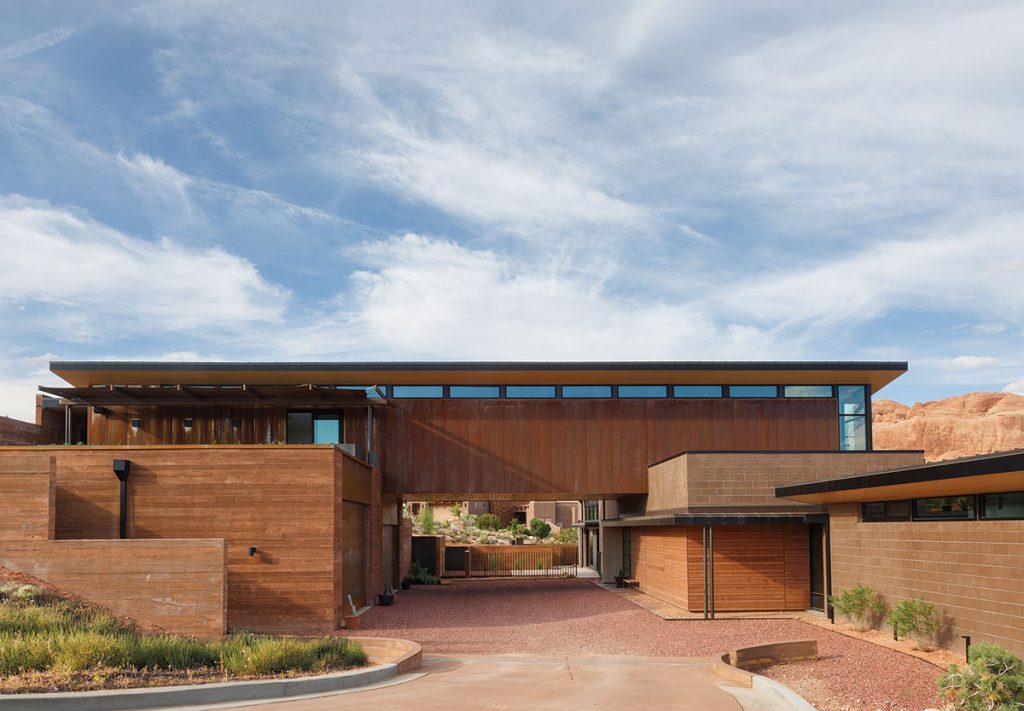
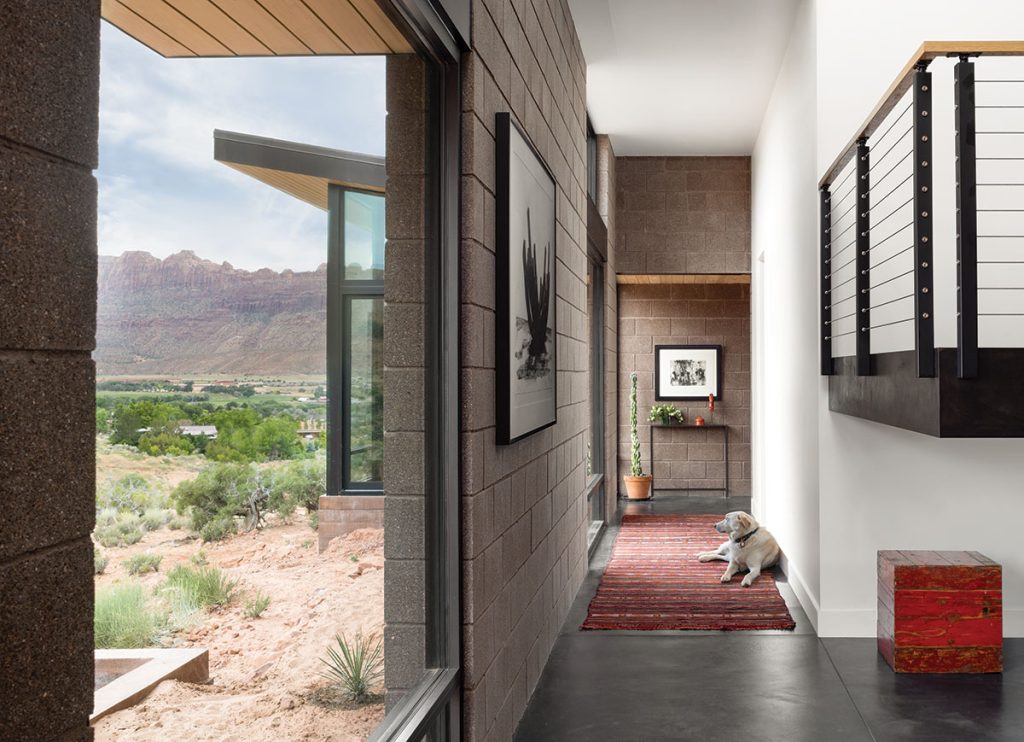
“The linear bridge allowed us to work with the steep grade,” Mullen explains. “It positioned the primary living spaces to capture the best views, while also providing flexible spaces for guests and entertaining when needed.”
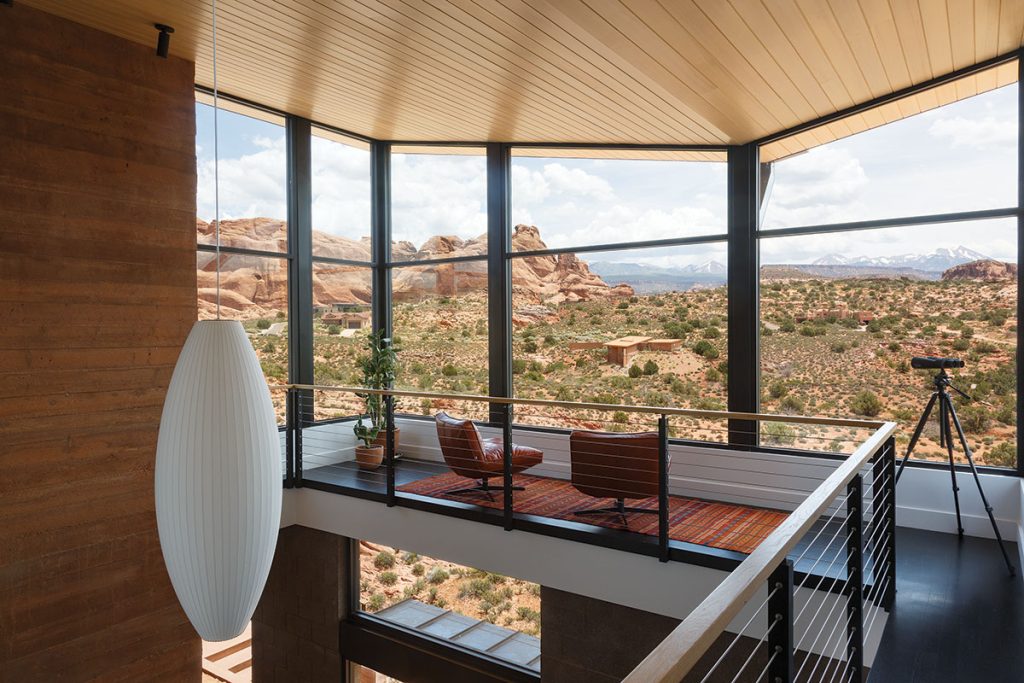
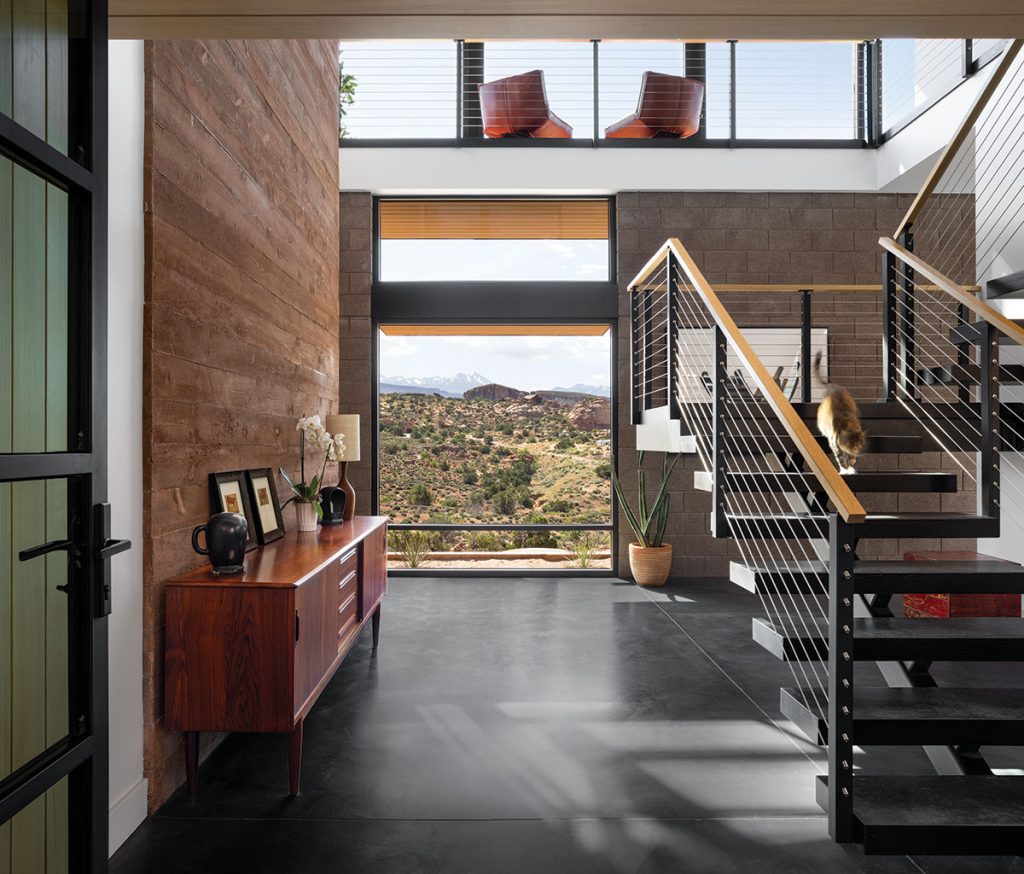
Crowned by a wood-clad butterfly ceiling, the second-level catwalk overlooks the main entry and offers breathtaking views of the surrounding red rocks and desert.
The butterfly roof, clerestory windows and strong connection to nature reflect a midcentury modern influence—carried through in the furnishings and thoughtfully curated interior details. “We like the aesthetic and the use of space in mid-century modern design, but we’re not strictly beholden to it,” the owner says. “We like an updated, contemporary look.” To that end, the home also embraces modern mountain sensibilities: a raw material palette, open flow and an emphasis on indoor-outdoor living suited to the rugged terrain. That blended architectural language carries through inside. In the great room, a dropped wood ceiling adds warmth and intimacy, drawing the eye toward sweeping views. Oversized sliding doors open to generous patios, expanding the living space. Though the concrete floors stop at the threshold, the continuity of materials and form creates a powerful sense of connection. Here, the landscape isn’t just admired—it’s part of everyday life.
Matching the surrounding textural landscape
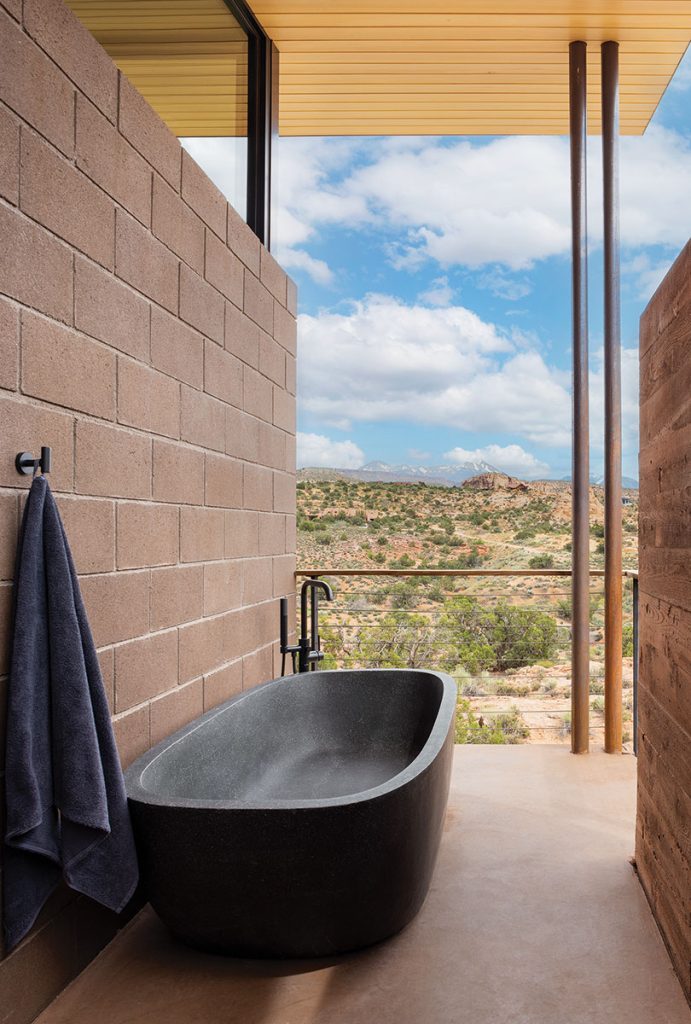
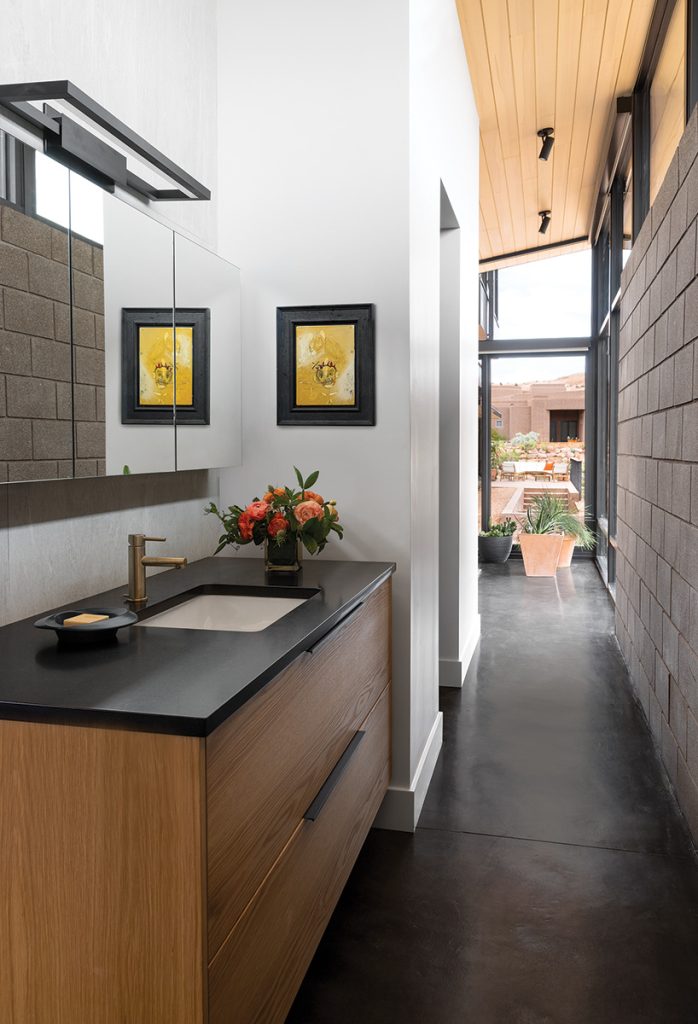
A concrete wall topped with clerestory windows separates the primary bathroom’s interior vanity space from an open-air bathing area with jaw-dropping views and fresh, desert air.
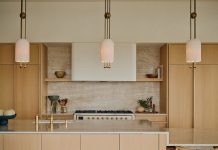
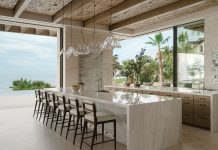
In the great room, contemporary furnishings and natural textures play off the raw beauty outside and reflect the homeowners’ active lifestyle. Warm wood tones and an earthy palette of sand, clay and charcoal allow the vibrant hues of the surrounding desert to take center stage. The kitchen, sleek but hardly sterile, opens to an outdoor dining area that feels like a natural extension of the home—a shaded reprieve perfect for stargazing or post-hiking or biking meals. “The great room and the adjacent patio have such beautiful views that it’s difficult not to always be gazing outside at the view of the red rocks and the La Sals,” the owner says. Meanwhile, views flood the light-filled entry and the bridge’s catwalk atop the floating staircase. “This house lives as much outside as it does in,” Ali says.
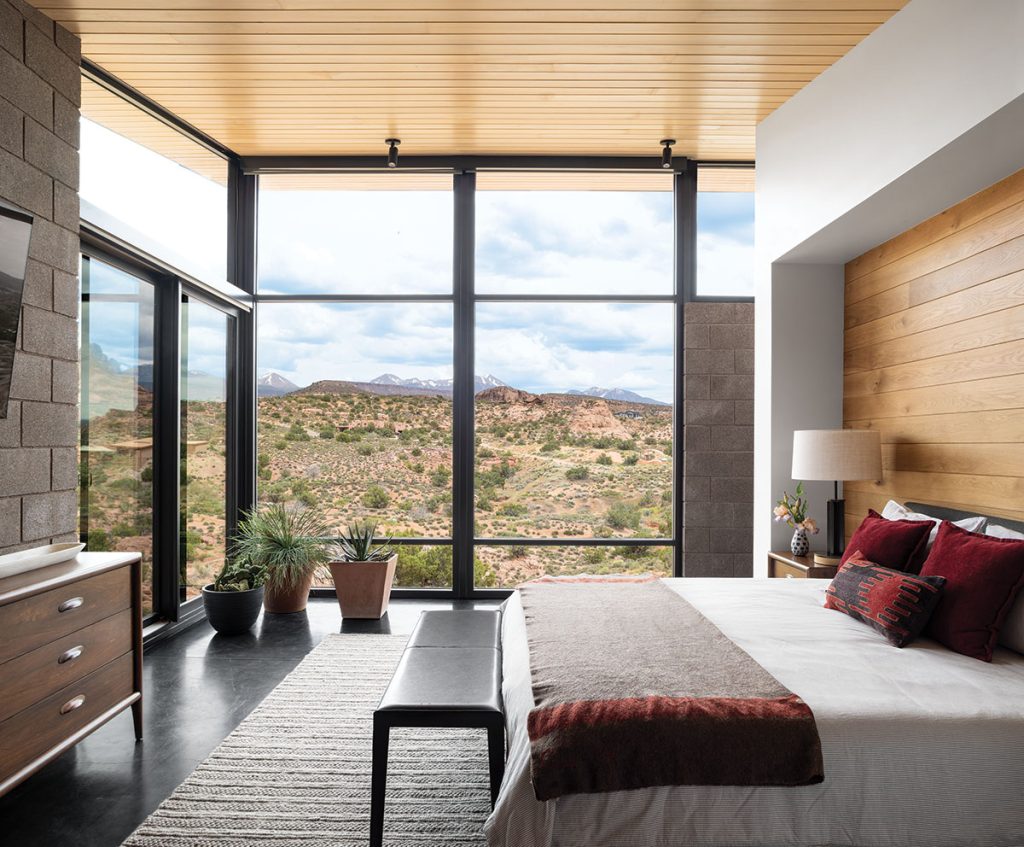
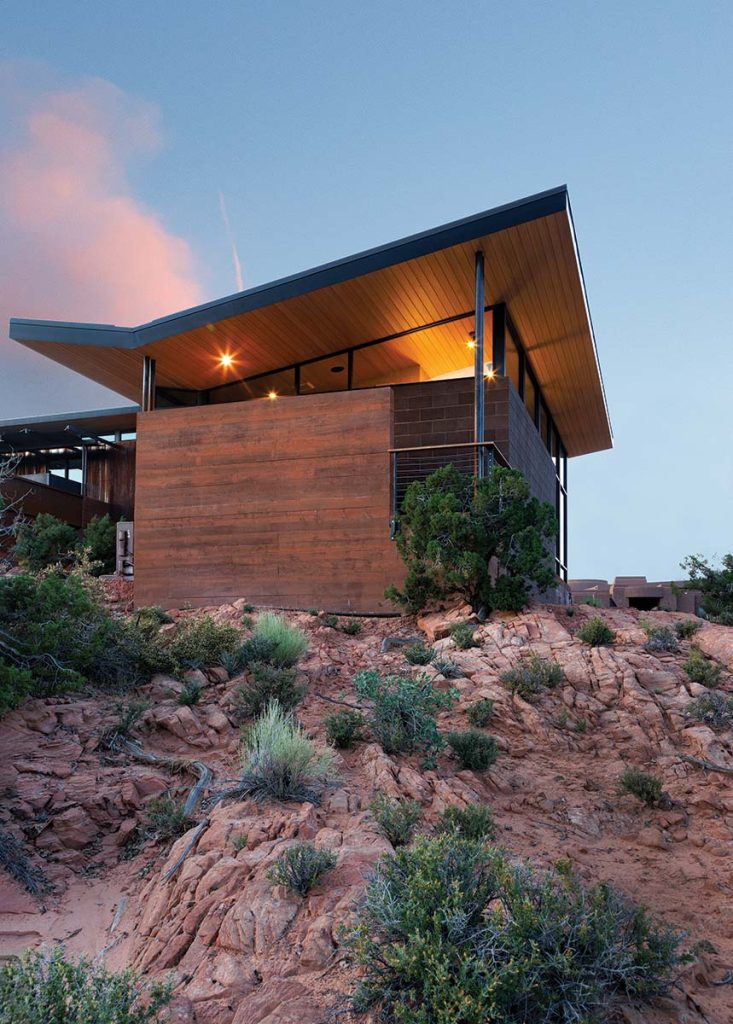
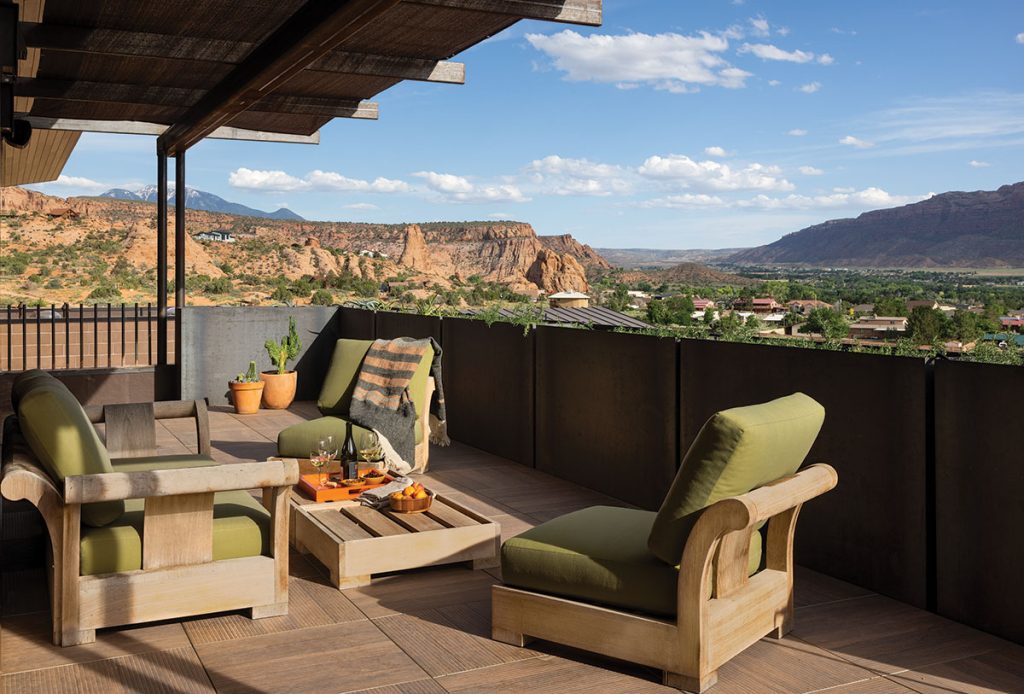
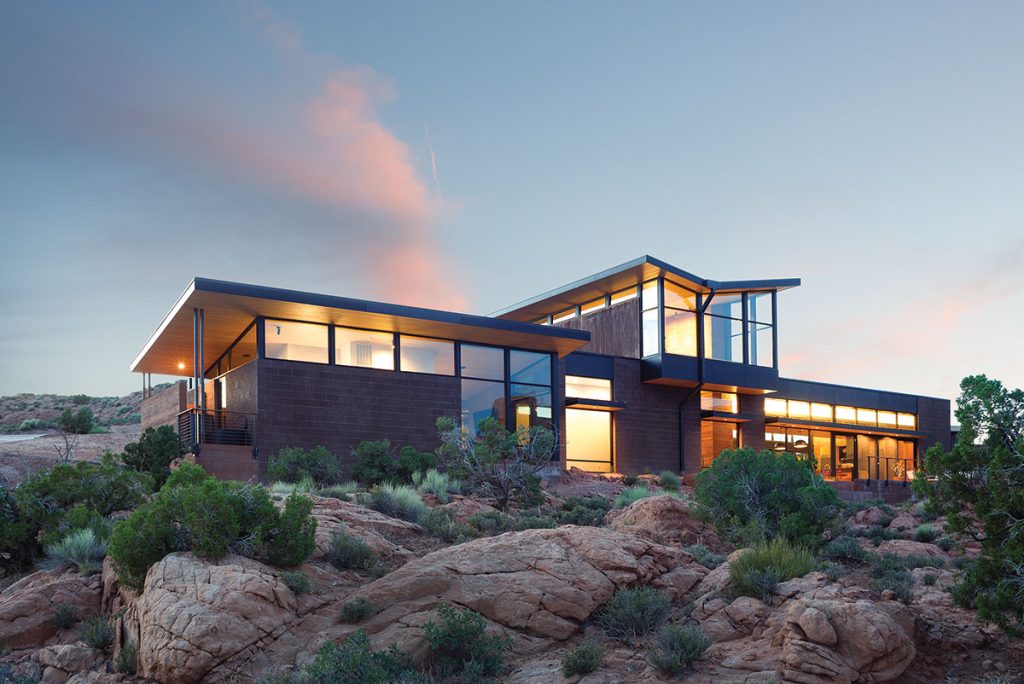
In a region where the landscape often steals the show, this house earns its place not by competing, but by complementing. Its power lies in restraint—in the way it defers to its surroundings, adapts to the climate and crafts luxury from light, space and intention. It doesn’t live big or feel uncomfortably spacious. Instead, it offers a comfortable, well-considered scale that invites ease and presence.
For those who believe modern architecture can be humble, responsive and rooted in place, this desert home stands as proof. The home doesn’t just look good in the landscape—it belongs to it.
Read more of our entertainment coverage and get the latest on the design lifestylesencompassing Utah. And while you’re here, subscribe and get four issues of Utah Style and Design, your curated guide to the best decor in Utah.