














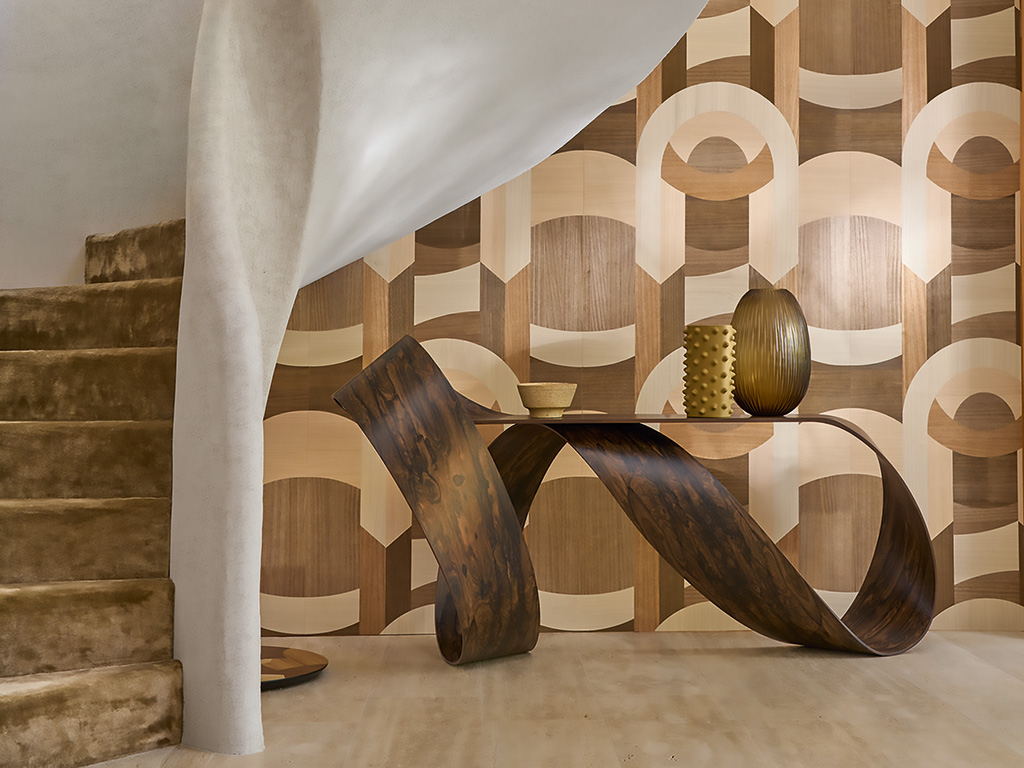
Grain Speak: From rift-sawn to end cut, the way wood is sliced shapes its character—and your design
Plain Sawn (Flat Sawn)
The most common cut, showing cathedral-like grain patterns with bold, flowing lines. Classic and warm, it brings movement and variation to floors, cabinetry and furniture.
Quarter Sawn
Cut at a 90-degree angle to the growth rings, it reveals straight, tight grain and striking medullary rays (flecks). Prized for its stability and refined look—ideal for fine furniture and paneling.
Rift Sawn
Similar to quarter sawn but angled to minimize medullary rays, creating an ultra-linear, uniform grain. Sleek and understated, it’s a favorite for contemporary designs.
Burl
Harvested from tree growths or knots, burl showcases swirling, irregular patterns—each piece one of a kind. A dramatic choice for veneers, statement furniture and artful accents.
Oyster Cut
A specialty veneer sliced to reveal concentric rings reminiscent of oyster shells. Organic, rhythmic and textural, it elevates bespoke furniture and decorative surfaces.
End Grain
Exposes the tree’s rings for a checkerboard or mosaic effect. Extremely durable, making it a go-to for cutting boards and striking surface treatments.
Live Edge
Not a cut, but a technique that preserves the tree’s natural edge. Celebrated for its raw, sculptural character—perfect for tables and statement pieces.
Read more of our entertainment coverage and get the latest on the design lifestyles encompassing Utah. And while you’re here, subscribe and get four issues of Utah Style and Design, your curated guide to the best decor in Utah.