
At Snowbird, a bold, modernist vision set in motion decades ago continue to shape every structure that follows
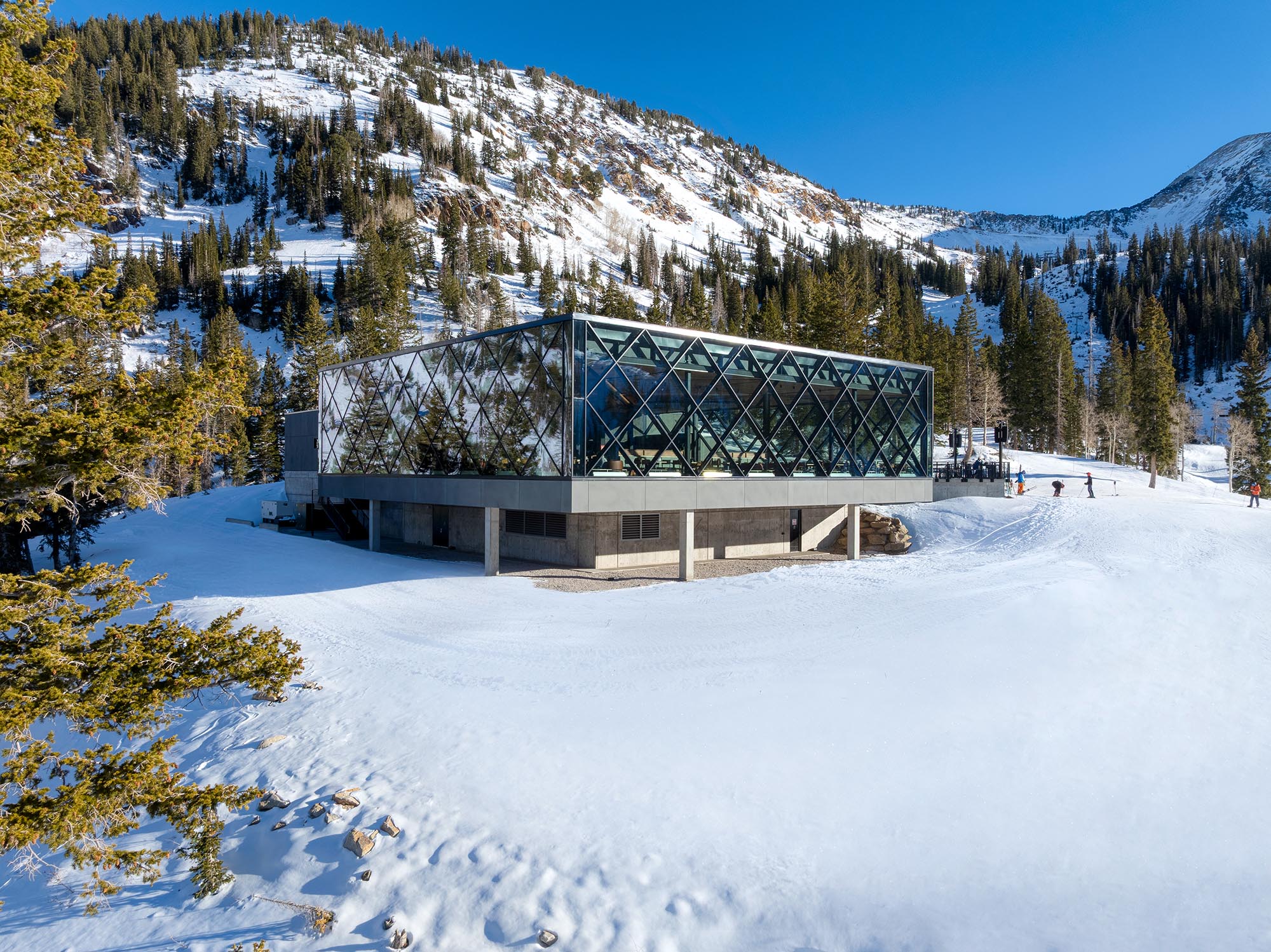
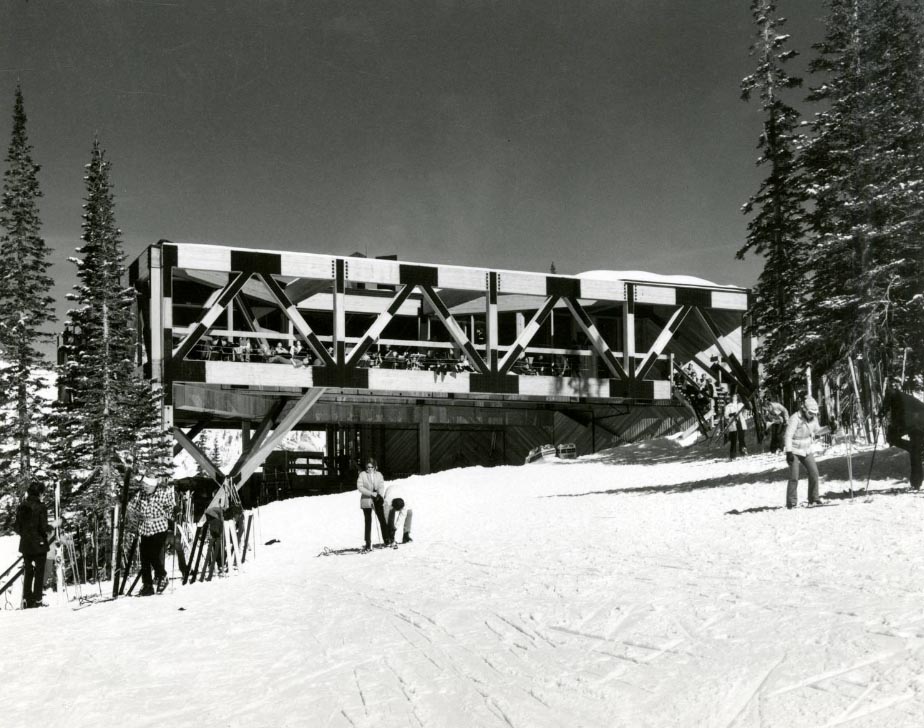
Last winter, Snowbird’s Gadzoom chairlift treated riders to more than transport up the mountain. As the chair reaches 9,000 feet, the ridgeline falls away to reveal The Nest, a new on-mountain restaurant completed in December 2025. It replaces Mid-Gad, a day lodge defined by rugged laminate wood beams and black steel gusset plates that had welcomed visitors since Snowbird’s opening day in 1971. At first glance, The Nest’s sleek, cube-like form suggests a clean break from its predecessor. But in fact, many of Mid-Gad’s characteristics were thoughtfully folded into the new building. This approach isn’t just nostalgic — it’s part of Snowbird’s enduring architectural legacy as America’s first modernist ski resort, where each addition builds on, rather than replaces, what came before.
Jack Smith had not been out of architectural school for long when his skiing buddy, Ted Johnson, then manager of the Alta Lodge, approached him in 1965 about designing a new ski resort in Little Cottonwood Canyon. Johnson and his wife, Wilma, had already been quietly buying land for what they would call Snowbird. “He showed me some sketches he’d drawn up of some A-frames, which I knew wouldn’t last through one winter,” recalls Smith, now 94, who worked in avalanche control at Alta as a student. He responded to Johnson, “Let’s do something completely modern, with the canyon’s challenges in mind, that will set the concept and philosophy behind Snowbird.” With Johnson’s go-ahead, Smith began working on Snowbird’s master plan.
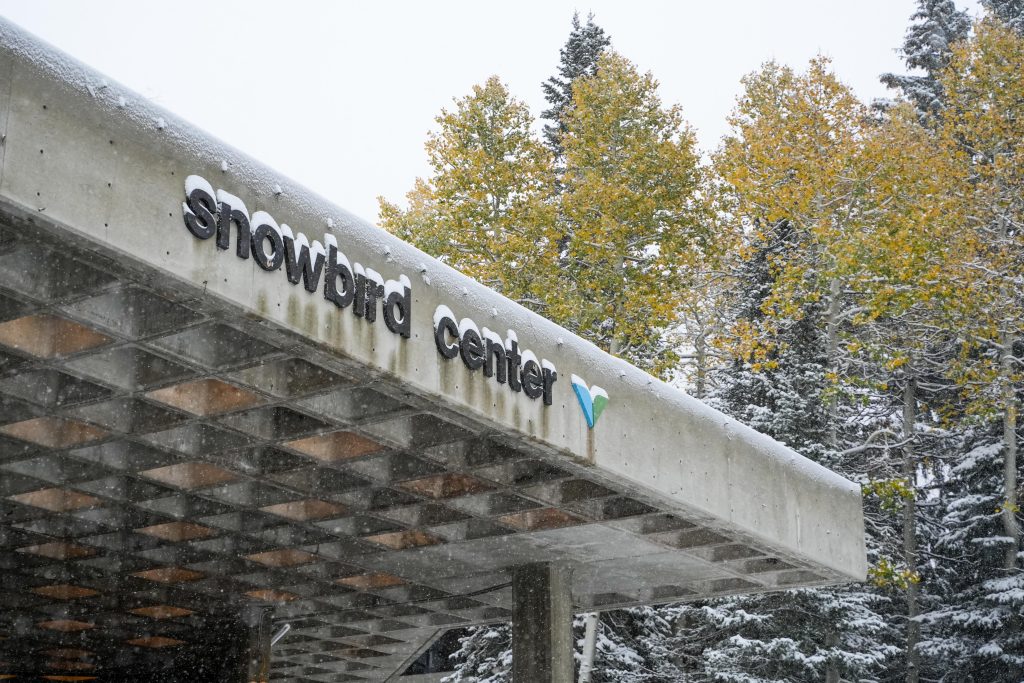
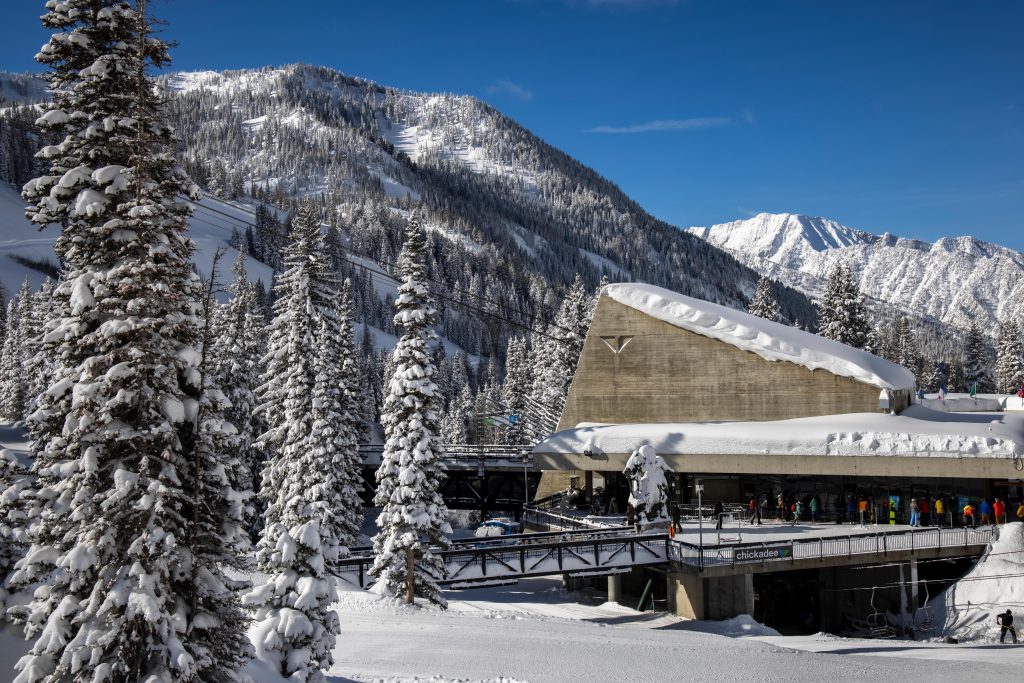
He gathered a group of colleagues — including James Christopher, Dan Kiley, Robert Bliss, Ray Kingston, and others — to create what he describes as a “studiously modern American ski resort.” The group landed on a plan featuring a series of integrated, multilevel structures stepping with the terrain while avoiding avalanche paths. Each had a sod roof to minimize visual impact from above and was to be, as Smith says, “in scale and in partnership with the soaring granite cliffs surrounding them.” Snowbird opened in 1971 with three chairlifts, the Aerial Tram, The Lodge at Snowbird, a resort center, and an on-mountain shelter (as required by the U.S. Forest Service), Mid-Gad Restaurant. Each building featured right angles, little to no ornamentation, and exposed masonry — a style developed, in part, to resist the canyon’s extreme weather and that came to define the Snowbird aesthetic.
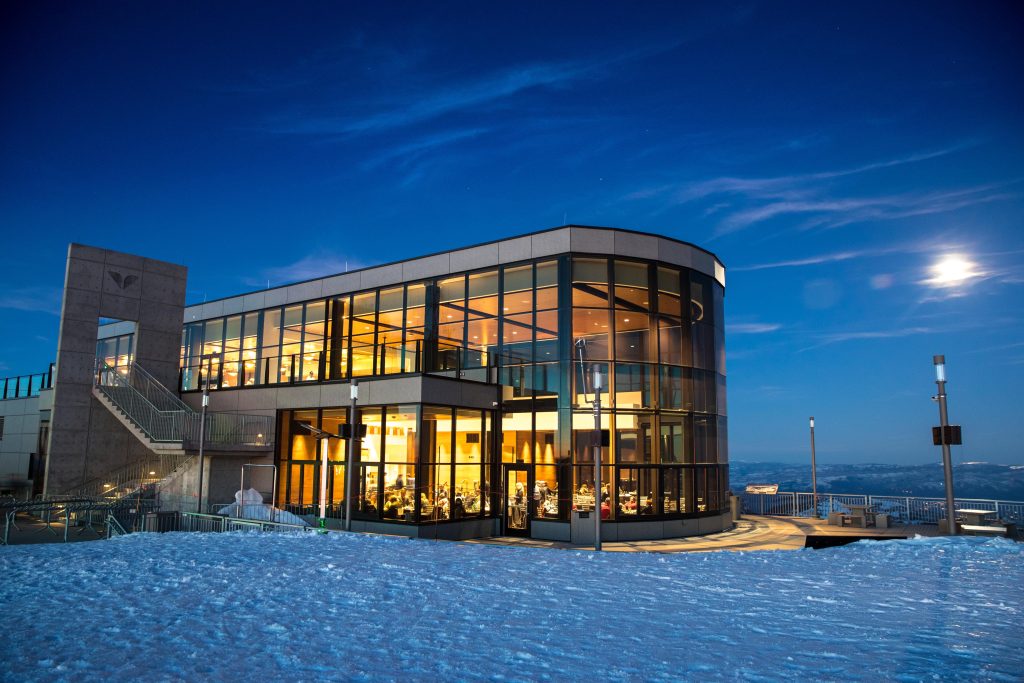
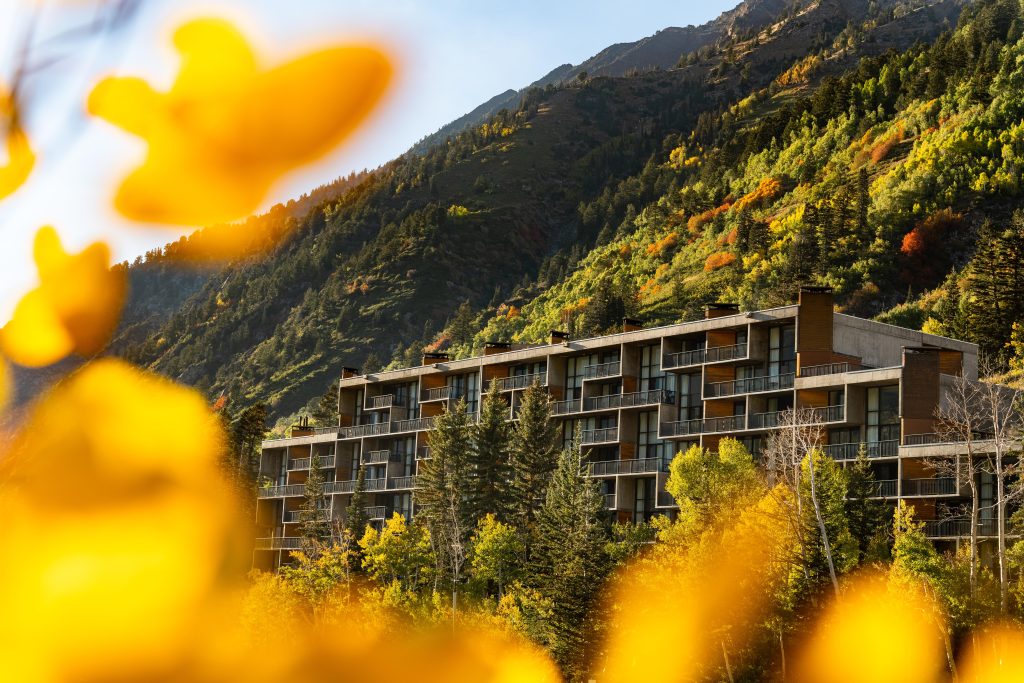
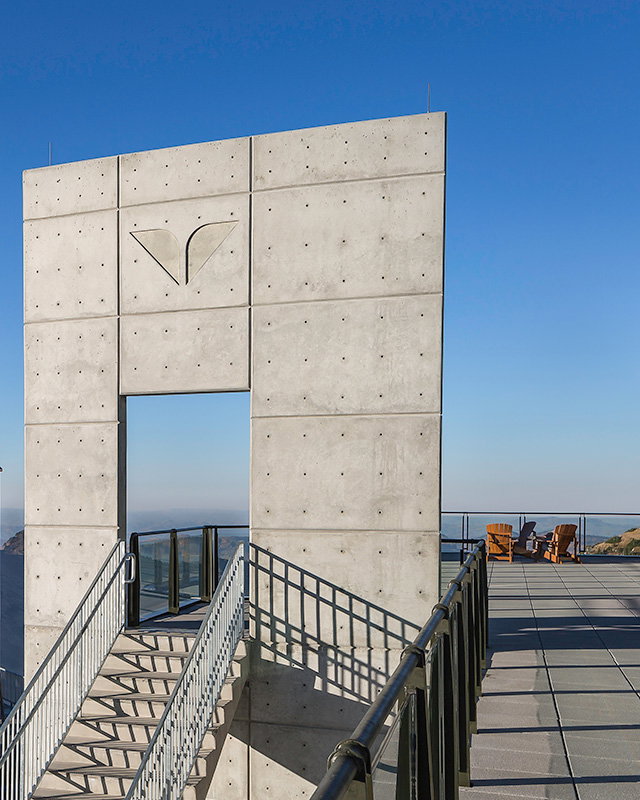
The 12-story Cliff Lodge, completed in 1973, quickly became the resort’s most recognizable expression of that thinking: an exposed concrete grid, skewed to 45 degrees to capture both sunlight and sweeping canyon views. The Cliff’s 1986 expansion, a 13-story addition connected to the original building by a dizzying 11-story open atrium, deepened the resort’s bold and efficient modernism by pairing darktinted glass with the exposed masonry. That language continued to evolve over time. In 2015, Snowbird opened The Summit, a 23,000-square foot glass and concrete day lodge perched atop the resort’s 11,000-foot high point and Aerial Tram terminus, Hidden Peak. The building’s design was initiated by architect Louis Ulrich and finished by GSBS Architects, which remains the resort’s architectural firm today. “We’re always trying to reduce and make things more efficient at Snowbird, both to align with the resort’s modernist architecture but also remain within budget,” says GSBS principal Tang Yang, who noted that on-mountain constructions, like The Summit and The Nest, are typically twice the cost of projects executed outside of a mountain environment. Back in Gad Valley, Snowbird’s building maintenance team spent more than two years attempting to preserve Mid-Gad, ultimately discovering that 50 years on the mountainside had taken a toll on the structure’s laminated-wood trusses. “We had them analyzed and found that many were almost completely rotted,” says Nima Mahak, Snowbird’s senior director of village operations.
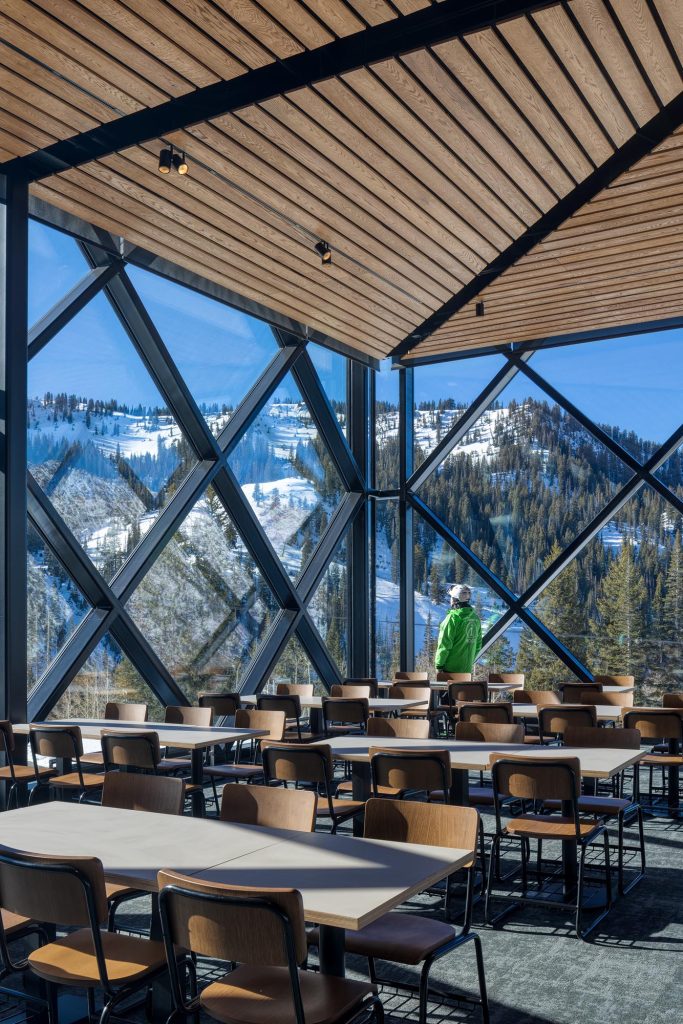
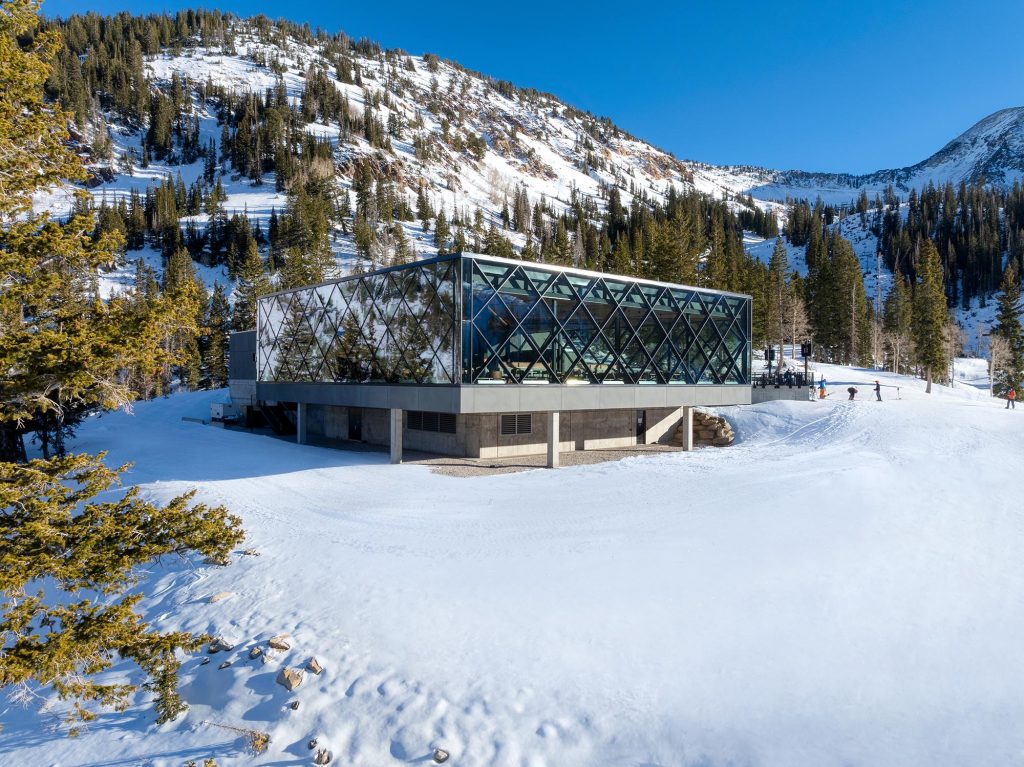
The effort to save Mid-Gad shaped the process of designing its replacement. “Modern architecture is a pure representation of what a space is for,” explains Soonju Kwon, GSBS principal and lead architect for The Nest. The new day lodge’s design evolved into two spaces: a lunch and break spot focused on the mountain and an efficient venue for culinary staff. “But integrating MidGad’s history was also a high priority,” Kwon says. Those who knew Mid-Gad will recognize The Nest’s many subtle nods to its forebearer. It occupies the exact same footprint and cantilevers over the slope as Mid-Gad did. A wooden slat ceiling echoes the rhythm of the former lodge’s diagonal beams, creating, as GSBS interior designer Beth Jasper describes, “a warm counterpoint to the glass expanses and the bright reflection off the snow outside.” Even the black steel, diamond-shaped window frames mirror Mid-Gad’s original exposed beams — refined but unmistakably familiar.

“Snowbird has never been cliché or tried to be something else,” says Kwon, who was recognized as 2025 Architect of the Year by Women in Architecture Salt Lake City for her leadership on The Nest. “We tried to take the resort’s unique identity and culture and translate it into The Nest. Mid-Gad lasted for 50 years, and we hope The Nest becomes part of the memories Snowbird’s next generation of visitors make there during the next 50 years and beyond.”
Read more of our architecture coverage and get the latest on the decorating and design encompassing Utah. And while you’re here, subscribe and get four issues of Utah Style and Design magazine.


